Why Did My Online Doctor Not Take My Blood Pressure?
Patients wonder why video visits skip vitals. The answer lies in the gap between traditional telehealth and modern contactless vitals capture. Explore the shift.
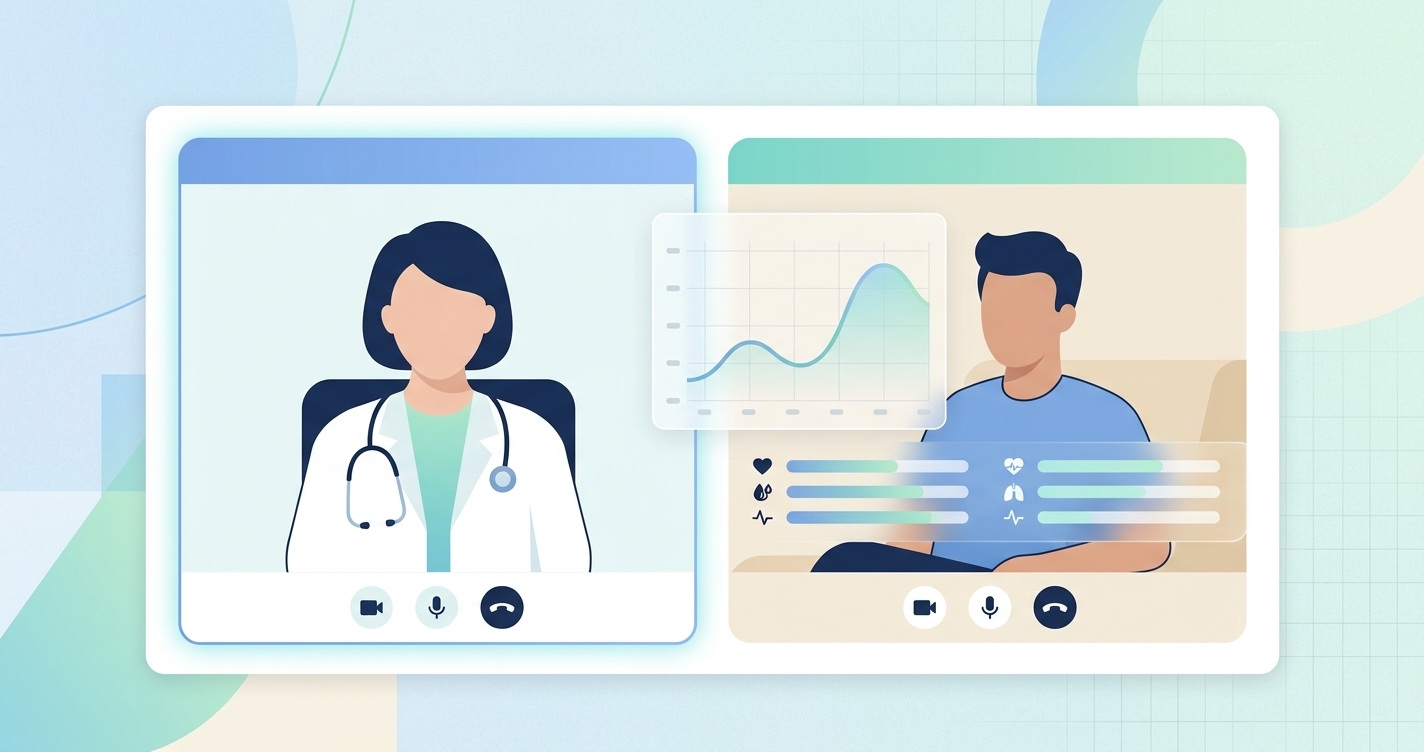
The rise of telehealth has been a landmark achievement for healthcare access, but for many patients, the experience feels incomplete. A common point of confusion arises after a video consultation: "Why didn't my doctor take my blood pressure?" This question highlights a fundamental gap in many virtual care platforms. While video calls have solved the challenge of distance, they have historically lacked the ability to capture the essential clinical data that both patients and providers expect from a medical evaluation. This absence of vital signs, particularly blood pressure, is not an oversight by the clinician, but a limitation of the underlying technology-a limitation that is now being overcome.
The conventional telehealth model operates under the assumption that a video feed is sufficient for a range of consultations. However, without objective physiological data, providers are often managing with an incomplete picture. The alternative has been to rely on patient-operated home blood pressure cuffs, a solution fraught with challenges. Studies have shown that a significant percentage of home monitors can be inaccurate, with some estimates as high as 30%. This inaccuracy stems from issues like improper cuff size, lack of patient training on correct measurement procedures, and the logistical hurdles of integrating patient-generated data into the electronic health record (EHR). For a telehealth platform, relying on this method means outsourcing a core clinical function to an unpredictable and unreliable process.
"A substantial proportion of home blood pressure monitors (5% to 15%, and in some studies over 30%) can be inaccurate, potentially leading to inappropriate treatment." - American Medical Association
The diagnostic gap in telehealth
The inability to measure blood pressure during a telehealth visit creates a significant diagnostic gap. In a traditional office visit, a blood pressure reading is a foundational data point, influencing everything from medication management for hypertension to risk assessment for cardiovascular events. The American Heart Association recommends regular blood pressure screening for all adults because it is a critical indicator of overall health. When a telehealth platform cannot facilitate this basic measurement, it places providers in a difficult position, forcing them to make assessments based on subjective patient reporting rather than objective data. This gap undermines provider confidence and can limit the scope of care that can be safely delivered remotely, pushing what could have been a definitive virtual visit into a follow-up in-person appointment.
| Feature | Traditional Telehealth Visit | Telehealth with Camera-Based Vitals | | :--- | :--- | :--- | | Blood Pressure Measurement | Not available; relies on patient self-reporting | Integrated, real-time trend capture | | Clinical Data | Subjective symptoms, visual assessment | Objective physiological data (BP, HR, SpO2) | | Provider Workflow | Data gaps, requires patient follow-up | Seamless data in video interface | | Patient Experience | Incomplete-feeling visit, hardware required | "No-touch" vitals, no extra devices | | Data Integration | Manual entry, inconsistent formats | Automated, EHR/FHIR-ready via API |
This limitation is particularly critical in several key areas of virtual care:
- Chronic Care Management: Ongoing monitoring for patients with hypertension, diabetes, and other chronic conditions.
- Urgent Care Triage: Quickly assessing the severity of a patient's condition to determine the appropriate level of care.
- Medication Management: Adjusting prescriptions for antihypertensive drugs based on real-time data.
- Preventive Health Screenings: Identifying asymptomatic hypertension in the general patient population.
Industry applications: bridging the vitals gap
The solution lies not in more hardware, but in smarter software. By integrating contactless vital signs technology directly into the telehealth platform, vendors can transform their existing video infrastructure into a clinical-grade data collection tool.
Chronic care management platforms
For patients with conditions like hypertension, consistent monitoring is key. Integrating camera-based vitals allows platforms to offer longitudinal tracking of blood pressure trends without requiring the patient to purchase or manage a separate device. This creates a richer dataset for providers and a stickier product for health system customers.
Urgent care and triage
In an acute care context, a blood pressure reading is a critical piece of the puzzle. A platform that can provide a blood pressure during a telehealth visit gives providers a powerful tool for risk stratification, helping them decide whether a patient can be treated remotely or needs to be escalated to an emergency department.
Mainstream telehealth platforms
As the telehealth market matures, differentiation is becoming essential. Adding built-in vital signs capture moves a platform beyond simple communication and into true virtual diagnostics. It becomes a core part of the care delivery value chain, not just a commodity video service.
Current research and evidence
The technology enabling this shift is remote photoplethysmography (rPPG). It uses the patient's existing device camera to analyze subtle, imperceptible changes in light reflecting off the skin to measure the underlying pulse wave. From this signal, advanced algorithms can estimate vital signs like heart rate, respiratory rate, and blood pressure trends.
The field is advancing rapidly, led by researchers at institutions worldwide. Work by teams at the University of Washington, including Theodore Curran and Daniel McDuff (2022), has explored new models for camera-based BP estimation. Similarly, researchers like Selene YL Tan at Singapore General Hospital (2023) have published studies on using rPPG technology in clinical settings. Dr. Edward S. Chen's group at Johns Hopkins University is also actively investigating rPPG extraction methods. While the technology is primarily intended for trend monitoring and screening-not yet as a direct replacement for cuff-based diagnostic readings-it provides invaluable clinical context where none existed before. Studies often report a Mean Absolute Error (MAE) for systolic blood pressure in the 5-12 mmHg range, a figure that continues to improve with advancements in AI and larger datasets.
The future of telehealth is contactless
The expectation for a blood pressure during a telehealth visit will soon become standard. As rPPG algorithms become more refined and validations more widespread, the distinction between an in-person visit and a virtual one will continue to blur. For telehealth platform vendors, this represents a critical inflection point. The platforms that embrace integrated, contactless vitals will be the ones that power the next generation of virtual care, moving from a simple communication tool to a sophisticated diagnostic and monitoring system. This shift empowers providers, improves patient outcomes, and creates a more robust and clinically defensible telehealth ecosystem.
Frequently asked questions
Q: How can a simple camera measure blood pressure? A: The technology is called remote photoplethysmography (rPPG). The camera detects tiny, invisible changes in the color of your skin as blood flows through the vessels underneath. Sophisticated AI algorithms analyze these changes to calculate the shape of your pulse wave, which is then used to estimate blood pressure trends.
Q: Is camera-based blood pressure as accurate as a cuff? A: Currently, camera-based methods are designed for capturing blood pressure trends and for screening, providing valuable data when a cuff is not available. They are not yet a regulatory-approved replacement for the diagnostic readings of a traditional cuff, but they effectively bridge the data gap in most telehealth encounters.
Q: How does this technology integrate into an existing telehealth platform? A: Modern contactless vitals are typically delivered via an SDK (Software Development Kit). This allows engineering teams to embed the functionality directly into their web or mobile applications, making the experience seamless for both the provider and the patient. The data can then be passed via API to provider dashboards and EHR systems.
Q: What about patient privacy and data security? A: The video stream is processed on-device or on a secure server to extract the vital signs data. The raw video is not typically stored. The resulting numerical data (e.g., '120/80 mmHg') is treated as protected health information (PHI) and is subject to the same strict HIPAA compliance standards as any other medical data.
The frustration of an incomplete clinical encounter is a shared one for patients and providers alike. The absence of a blood pressure during a telehealth visit is a clear symptom of a technology stack that has not kept pace with clinical needs. Circadify is addressing this space by providing telehealth platform vendors with the rPPG-based SDKs needed to close this gap, adding real-time, contactless vital signs to any video visit. To learn more about integrating these capabilities, visit circadify.com/custom-builds to explore the documentation and request a platform demo.