What If My Blood Pressure Jumps During My Online Visit Today?
How telehealth blood pressure monitoring with contactless rPPG can capture acute vital sign changes during a video visit, building patient trust and clinical utility.
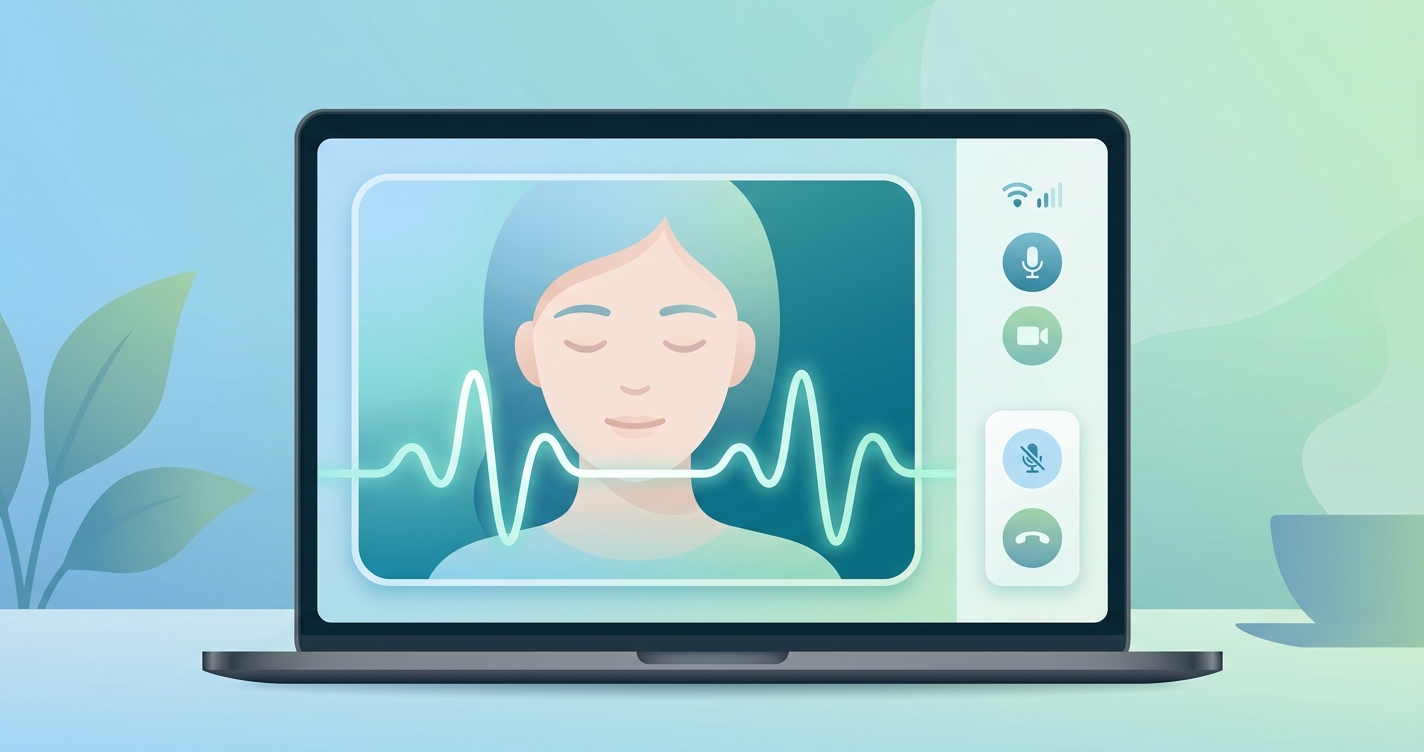
A patient logs into a video appointment already anxious. They rushed from work, climbed two flights of stairs, and the small camera light blinking on their laptop adds another layer of unease. Somewhere in their chest, the pulse quickens. This is the moment patients quietly worry about and the moment most virtual care platforms cannot see. The question "What if my blood pressure jumps during my online visit today?" is not just patient anxiety. It is a product gap. Telehealth blood pressure monitoring that works inside the video call itself is moving from a research curiosity to a credible expectation, and the platforms that capture those acute changes will own a level of clinical trust that scheduling and messaging features never delivered.
White coat hypertension affects an estimated 15 to 30 percent of people with elevated office readings, and untreated cases carry roughly twice the risk of death from heart disease compared with consistently normal blood pressure, according to research summarized by the American Heart Association and a 2019 analysis published in the Annals of Internal Medicine.
The clinical irony is sharp. A blood pressure reading taken in a moment of stress may not reflect a patient's baseline, yet that transient spike still carries meaning. An acute jump during a consultation can signal an anxiety response worth discussing, a medication timing issue, or in rare cases an urgent cardiovascular event. For telehealth platforms, the inability to observe any of this in real time has been a structural weakness. The video shows a face and a voice. It does not show physiology.
Why telehealth blood pressure monitoring matters during a live visit
Telehealth blood pressure monitoring during a live consultation addresses a specific failure mode of virtual care: the gap between what a patient reports and what their body is actually doing. In a physical clinic, a nurse can cuff a patient mid-visit if something seems off. Online, the provider has historically relied on self-reported numbers from a home device the patient may or may not own, may or may not use correctly, and may have taken hours earlier.
Remote photoplethysmography, or rPPG, changes the available data. The technique reads subtle color changes in facial skin caused by blood volume shifts with each heartbeat, using the same webcam already running the call. From that pulse waveform, algorithms estimate heart rate, respiration, and increasingly, blood pressure trends. No cuff, no finger clip, no shipped hardware.
The value is not a single perfect number. It is the ability to observe change across the duration of a visit. A reading that climbs when a sensitive topic comes up, or settles once a patient calms, gives a provider context that a static home measurement cannot.
The table below frames how the live-visit approach compares with the methods telehealth platforms rely on today.
| Approach | Hardware burden | Captures acute change in visit | Data reliability concern | Platform integration effort | | --- | --- | --- | --- | --- | | Patient self-report of home cuff reading | Patient owns cuff | No, reading is historical | High, depends on technique and honesty | Low, manual entry | | Mailed connected BP cuff | Platform ships device | Partial, if used live | Moderate, device sync issues | High, logistics and fulfillment | | Wearable-derived estimates | Patient owns wearable | Sometimes, not synced to call | Moderate, not visit-anchored | Moderate, third-party API | | Contactless rPPG during the call | None, uses webcam | Yes, continuous during visit | Improving, trend-focused today | Moderate, SDK embed |
A few practical points follow from this comparison:
- Self-reported readings remain the default for most platforms, and they are the weakest link in the data chain.
- Shipped hardware solves accuracy but introduces cost, fulfillment, and patient adherence problems that erode at scale.
- rPPG is the only option that is anchored to the visit itself, observing the patient at the exact moment the provider is talking to them.
- The current strength of camera-based blood pressure is trend and context, not a substitute for a validated diagnostic cuff.
Industry applications for platform builders
For telehealth software vendors, the relevant question is not whether the science is interesting but where it produces product value. Three application areas stand out.
Anxiety-aware behavioral and primary care visits
In behavioral health and primary care, an acute blood pressure or heart rate jump during a conversation is clinically meaningful signal. A provider who can see a patient's pulse climb while discussing a stressor gains a conversation aid, not just a data point. Embedding telehealth blood pressure monitoring into these visit types turns the camera into a passive observer of the autonomic response that words often hide.
Hypertension and chronic care follow-ups
Patients managing high blood pressure attend frequent follow-ups where the central question is whether their numbers are trending in the right direction. Capturing a contactless reading at the start of each visit creates a longitudinal record tied to actual appointments, reducing reliance on patients to bring their own logs.
Urgent and triage encounters
In on-demand and triage settings, a sudden vital sign change can shift a low-acuity visit into one that needs escalation. Real-time physiological insight gives triage workflows an objective input rather than a symptom checklist alone, which several platforms are already pairing with automated prioritization logic.
Current research and evidence
The evidence base for camera-based blood pressure is maturing but honest about its limits. A 2024 validation of a non-contact photoplethysmography mobile application, published in PMC, reported a mean absolute error of roughly 14 mmHg for systolic and 10 mmHg for diastolic pressure, with accuracy figures that the authors positioned for wellness monitoring rather than diagnosis. A separate study running from March 2023 to June 2024 found a mean absolute percentage error near 9.5 percent for systolic and 7.5 percent for diastolic readings.
Researchers are candid that published error margins for camera-based blood pressure typically exceed the plus or minus 5 mmHg threshold expected of validated cuff devices. A 2024 review in the journal Connected Health and Telemedicine described rPPG blood pressure as promising for screening and continuous trend monitoring while noting sensitivity to lighting, motion, camera angle, and the need for periodic calibration against a reference cuff. Work presented at Computing in Cardiology has reinforced that accuracy can degrade at elevated heart rates, precisely the condition an anxious patient may present.
The takeaway for builders is specific. Camera-based blood pressure today is strongest as a trend and context layer, flagging meaningful change and supporting conversation, while a validated cuff remains the reference for diagnosis. Framing the feature this way to providers and patients is the difference between credible utility and overpromising.
The future of telehealth blood pressure monitoring
The trajectory points toward tighter integration and better signal handling. Three developments are worth watching.
First, hybrid calibration models are emerging, where an occasional cuff reading anchors an otherwise contactless stream, narrowing error while preserving the no-hardware experience for most encounters. Second, motion and lighting robustness is improving through machine learning trained on more diverse populations and real-world video conditions, addressing the demographic and environmental gaps current studies flag. Third, real-time presentation is becoming a design discipline of its own, as platforms learn how to surface a live reading to a provider without alarming a patient or cluttering the interface.
For platform companies, the strategic implication is that physiological insight will become an expected layer of virtual care rather than a differentiator reserved for the few. The window to build trust by capturing what happens in the moment, including the blood pressure jump a patient quietly fears, is open now.
Frequently asked questions
Can a webcam really detect if my blood pressure spikes during a video visit? A webcam paired with rPPG can detect pulse and respiration changes reliably and can estimate blood pressure trends. Current research positions camera-based blood pressure as a screening and trend tool rather than a diagnostic replacement for a validated cuff, so it is best used to flag meaningful change and prompt follow-up.
Is an acute blood pressure jump during a consultation dangerous? A transient rise often reflects stress, exertion, or anxiety and is usually not an emergency. It can still be clinically useful, helping a provider distinguish white coat responses from sustained elevation. A provider interprets the change in context rather than treating a single elevated reading as a diagnosis.
Why do platforms prefer contactless vitals over mailing a cuff? Shipped devices add cost, logistics, and adherence problems that worsen at scale, and they capture readings outside the visit. Contactless rPPG uses the webcam already in the call, anchoring the measurement to the exact moment the provider is observing the patient.
How accurate is camera-based blood pressure today? Published studies report mean absolute errors larger than the plus or minus 5 mmHg standard for validated cuffs, which is why the technology is framed for trend monitoring and screening. Accuracy continues to improve through better algorithms and optional cuff calibration.
Circadify is building toward this exact problem, giving telehealth platforms a way to capture real-time physiological signal during the visit itself without asking patients to own or use any hardware. Teams evaluating how to add contactless blood pressure and vital signs to their video workflows can review the platform demo and SDK documentation at circadify.com/custom-builds.