What Are Video-Based Vitals? A 5-Minute Guide for Leaders
A high-level guide for telehealth executives on how remote photoplethysmography (rPPG) extracts vital signs during video visits and its clinical impact.
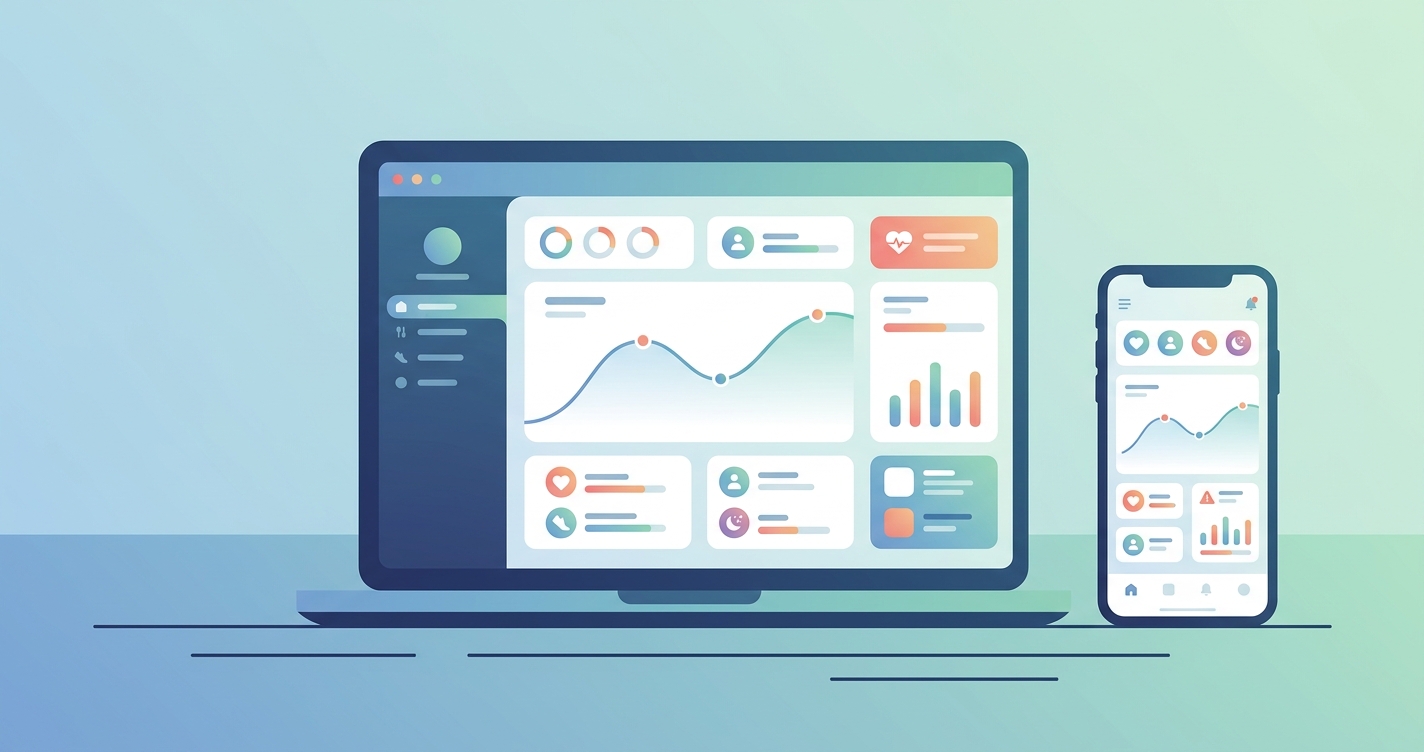
The integration of physiological measurement into virtual care is undergoing a fundamental shift. For years, executive teams at telemedicine companies have wrestled with a critical gap in remote consultations: the absence of objective clinical data. Physicians are forced to rely on subjective patient reporting or manual measurements taken with uncalibrated consumer hardware. This missing data layer routinely limits the scope of virtual visits and drives up triage to urgent care centers. However, recent advancements in computer vision and artificial intelligence have introduced a scalable alternative. Measuring telehealth vital signs through a standard smartphone or laptop camera has moved from a theoretical concept to an active deployment reality. By analyzing microscopic changes in light reflection on the human face, software can now extract heart rate, respiration rate, and other parameters without shipping a single device to the patient. For non-technical executives, understanding the mechanics, limitations, and operational impact of this technology is a required step for roadmapping the next generation of virtual care.
"The global market for artificial intelligence-powered remote vital sign cameras reached $1.48 billion in 2024, expanding at a projected compound annual growth rate of 18.2 percent as healthcare platforms aggressively integrate contactless monitoring capabilities." (Strategic Market Research, 2024)
The mechanics behind telehealth vital signs
At its core, the technology driving video-based measurement is called remote photoplethysmography (rPPG). While the term sounds complex, the underlying principle is straightforward and built upon the same physics as traditional pulse oximeters used in hospitals. When the heart beats, it pumps a volume of blood through the microvascular tissue just beneath the skin. This pulse creates a minute change in the volume of blood vessels, which in turn alters how much ambient light is absorbed and how much is reflected back to a sensor.
In a clinical setting, a pulse oximeter clamps onto a finger and shines a dedicated light source through the tissue to measure this absorption. In a virtual visit setting, remote photoplethysmography relies on ambient light in the patient's room and the standard red-green-blue camera built into their mobile device or laptop. The software analyzes the video feed pixel by pixel, isolating the facial region and tracking the subtle color variations that occur with every cardiac cycle. These variations are completely invisible to the naked human eye but are easily quantifiable by modern image processing algorithms.
Extracting telehealth vital signs via video is not merely a hardware trick; it is primarily a software achievement. The raw signal captured by a standard webcam is incredibly noisy. Patients move, internet connections degrade, and lighting conditions change wildly from a sunny living room to a dimly lit bedroom. The breakthrough in recent years has been the development of machine learning models that can filter out this environmental noise, lock onto the region of interest on the patient's face, and isolate the true physiological signal. This allows engineering teams to deploy a solution that works across diverse patient populations and hardware configurations without requiring a controlled environment.
One of the most significant technical hurdles in extracting telehealth vital signs has always been motion. When a patient speaks, nods, or adjusts their posture during a consultation, the physical region of interest on their face shifts. Early iterations of this software struggled to maintain a lock on the necessary pixels, resulting in broken signals and failed readings. Today, advanced computer vision models solve this by employing dynamic facial tracking. The software maps dozens of microscopic landmarks on the human face, continuously recalibrating the measurement zone in three-dimensional space. This ensures that even if a patient is naturally expressive or using a handheld mobile device, the algorithm can sustain a continuous reading, maintaining a high quality of data throughout the brief measurement window.
| Feature | Video-Based Vitals (rPPG) | Traditional RPM Hardware | | :--- | :--- | :--- | | Patient Hardware Required | None (uses existing smartphone or laptop camera) | Dedicated devices (blood pressure cuffs, pulse oximeters) | | Distribution Logistics | Zero shipping, instant software access | Requires inventory management, shipping, and returns | | Onboarding Friction | Low (click to start camera permissions) | High (pairing via Bluetooth, device charging) | | Primary Use Case | Spot-check telehealth vital signs during active video consultations | Continuous or daily asynchronous monitoring for chronic care | | Cost Structure | Software licensing (API/SDK integration) | Hardware unit costs plus recurring software platform fees |
Industry applications in virtual care
The appeal for engineering and product leaders lies in how seamlessly video-based vitals can be integrated into existing user flows. Rather than forcing a patient to download a secondary application or sync a bluetooth device, the measurement occurs within the primary video consultation interface.
Urgent care and triage
When a patient initiates an on-demand virtual visit for acute symptoms, the provider often has mere minutes to determine if the patient can be treated remotely or needs escalation to an emergency department. Video-based vitals provide an immediate baseline. If a provider can observe an elevated heart rate and a rapid respiration rate while the patient describes flu-like symptoms, it adds a layer of objective data to the clinical decision-making process. This capability directly reduces unnecessary referrals to physical care settings.
Behavioral Health
The behavioral health sector has seen massive adoption of virtual care, yet practitioners remain largely separated from the physiological state of their patients. Integrating vital sign extraction into psychiatric or therapy sessions allows providers to monitor physiological arousal, such as an increased heart rate during a discussion of a traumatic event.
- It provides a metric for anxiety and stress responses.
- It requires absolutely no physical contact, maintaining the safety and comfort of the virtual therapy environment.
- It offers a quantitative baseline for evaluating the effectiveness of breathing exercises and grounding techniques during the session.
Remote patient monitoring transitioning
While video-based measurement is primarily a spot-check tool, it serves as an excellent gateway for longer-term monitoring programs. Telehealth platforms often struggle to convince patients to enroll in continuous monitoring programs because the initial hardware setup feels intimidating.
- Utilizing a frictionless video scan introduces the patient to the concept of physiological monitoring without any physical commitment.
- Providers can use the immediate data from a video visit to justify the medical necessity of shipping dedicated continuous monitoring hardware.
- It establishes a baseline reading that can be compared against the first set of data generated once the physical hardware arrives at the patient's home.
Current research and evidence
The transition of remote photoplethysmography from academic laboratories to commercial telehealth platforms has been accompanied by a growing body of peer-reviewed validation. Executive buyers must distinguish between early theoretical papers and recent applied research focused on real-world clinical workflows.
A notable 2024 study published in JMIR Formative Research by Lynn Garvin, Eric Richardson, Leonie Heyworth, and D. Keith McInnes at the Veterans Affairs Boston Healthcare System evaluated the deployment of a video-based vitals tool. The researchers investigated the usability of a contactless remote photoplethysmography feature directly within the VA Video Connect platform. The pilot usability study found that both clinical providers and veteran patients rated the software as highly useful and easy to use. This research is highly relevant because it moves beyond controlled lab settings and demonstrates that video-based extraction is viable in a massive, real-world health system serving diverse and often elderly populations.
Additionally, a 2023 study published in medRxiv by Sujata Rajan and colleagues evaluating the WellFie smartphone application demonstrated that remote photoplethysmography technology could achieve high predictive accuracy for parameters like heart rate and respiratory rate in normotensive adults. A critical area of ongoing research within this domain focuses on ensuring equity across diverse patient populations. Historically, optical measurement tools, including hardware pulse oximeters, have struggled with accuracy when processing signals through higher concentrations of melanin. Modern engineering efforts and clinical studies are actively prioritizing inclusive data collection. By training machine learning models on highly diverse data sets, researchers aim to guarantee that video-based telehealth vital signs function equitably regardless of a patient's skin tone. This commitment to algorithmic fairness is a crucial evaluation metric for any executive assessing third-party measurement vendors.
The future of video-based measurement
The strategic roadmap for contactless measurement extends far beyond basic heart rate and respiration. As computational power on mobile devices increases, the ability to run more complex neural networks locally on the patient's phone (edge computing) is becoming a reality. This shift reduces reliance on cloud processing, which in turn lowers latency and mitigates privacy concerns associated with transmitting video data.
In the near term, telemedicine platform leaders should expect capabilities to expand into advanced cardiovascular assessments, such as estimated blood pressure trends and heart rate variability (HRV). Because HRV is a sensitive indicator of autonomic nervous system function, its reliable extraction via video could open new diagnostic pathways for both physical and mental health disciplines.
For engineering leaders and product managers, the decision is no longer whether to evaluate contactless measurement, but rather how to architect the integration. Building proprietary algorithms from scratch requires years of research and massive specialized engineering costs. The industry standard has shifted toward licensing software development kits and application programming interfaces from dedicated infrastructure providers. This approach allows a telehealth platform to embed vital sign capture into their existing application in a matter of weeks, focusing internal engineering resources on the user experience and clinical dashboard design rather than the underlying physics of light reflection.
Frequently asked questions
What exactly is rPPG? Remote photoplethysmography (rPPG) is a software-based technology that uses a standard camera to measure changes in light reflection on the skin, which correspond to blood volume changes with each heartbeat. This allows for the calculation of vital signs without physical contact.
Do patients need any special hardware? No. The primary advantage of video-based measurement is that it relies on the hardware the patient already owns. Any modern smartphone, tablet, or laptop with a functional webcam and adequate processing power can support the extraction of vital signs.
How does lighting affect the accuracy of the readings? Because the technology relies on measuring light reflection, extremely poor lighting can degrade the signal. However, modern machine learning algorithms are designed to filter out typical environmental noise and can successfully capture readings in standard indoor lighting conditions.
Are the video feeds recorded or stored? In enterprise deployments, the video feed is typically processed in real-time on the user's device or in a secure, ephemeral cloud environment. The raw video is not stored or recorded; only the extracted numerical data is transmitted to the provider's electronic health record or clinical dashboard.
For engineering and product leaders looking to modernize their virtual care infrastructure, adding physiological data capture is the next logical step. Circadify is directly addressing this space by providing a robust infrastructure layer for digital health companies. Our tools allow you to seamlessly add real-time physiological measurement to your existing application without the burden of hardware logistics. To explore how an rPPG SDK can integrate with your platform and capture vital signs during video visits, view our platform demo and documentation at circadify.com/custom-builds.