5 Telehealth Vital Signs Use Cases That Unlock New Revenue Streams
Explore five telehealth vital signs use cases that enable new revenue streams for virtual care platforms, from RPM and CCM to value-based care and employer wellness programs.
The conversation around telehealth has fundamentally changed. It is no longer a question of convenience versus clinical rigor. Instead, the focus has shifted to how virtual care platforms can deliver measurable clinical data at scale. For telehealth software vendors and platform CTOs, this presents a significant opportunity. Integrating contactless vital signs capture is the key to unlocking new, sustainable income sources and moving beyond the commoditized video visit. The most forward-looking telehealth vital signs use cases revenue models are not speculative; they are being implemented today.
"The global remote patient monitoring market size was valued at USD 53.6 billion in 2022 and is projected to grow from USD 67.4 billion in 2023 to USD 285.5 billion by 2030, exhibiting a CAGR of 22.9% during the forecast period." - Fortune Business Insights, 2023.
Unlocking value: analyzing telehealth vital signs use cases for revenue
The primary driver for integrating vital signs into telehealth platforms is the creation of new, billable services. While video visits have become table stakes, the ability to capture, analyze, and act on physiological data like heart rate, respiratory rate, and blood pressure trends is a powerful differentiator. This evolution is driven by the convergence of three key factors: mature remote photoplethysmography (rPPG) technology that requires no patient hardware, clear reimbursement pathways from payers, and growing demand from providers for tools that support value-based care. For telehealth platform companies, exploring these telehealth vital signs use cases revenue opportunities is now a central part of strategic planning. It represents a move from a SaaS model based on access to a clinical data model based on outcomes.
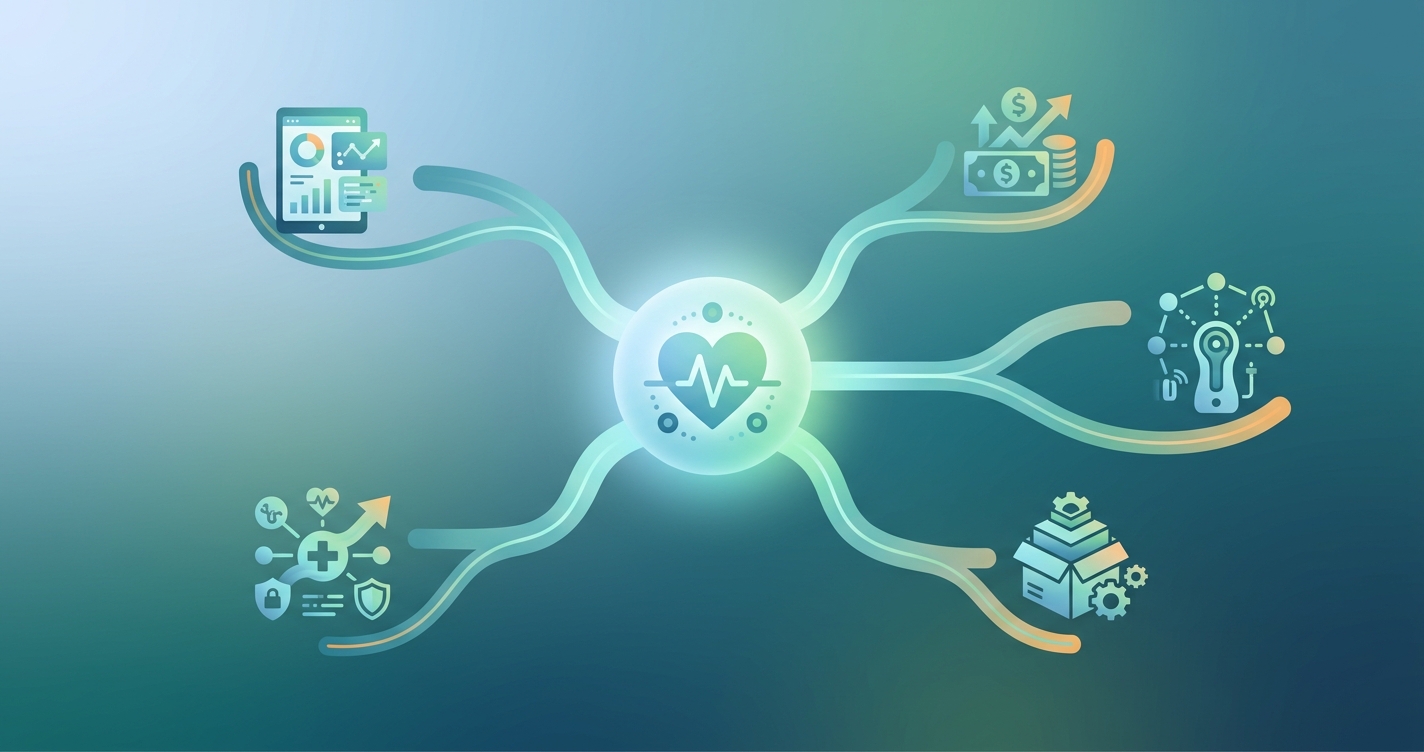
| Use Case | Revenue Model | Target Population | Integration Complexity | | :--- | :--- | :--- | :--- | | 1. Remote Patient Monitoring (RPM) | Fee-for-Service (CPT Codes) | Chronic Conditions (e.g., Hypertension) | Medium | | 2. Chronic Care Management (CCM) | Fee-for-Service (CPT Codes) | Multiple Chronic Conditions | Medium | | 3. Value-Based Care Contracts | Shared Savings / Per-Member-Per-Month | At-Risk Health System Populations | High | | 4. Employer Wellness Programs | Per-Employee-Per-Month (PEPM) | Corporate Employees | Low-to-Medium | | 5. Direct-to-Consumer Subscriptions | Monthly/Annual Subscription | Health-Conscious Individuals | Low |
Industry applications: 5 use cases in detail
1. remote patient monitoring (rpm) services
RPM is one of the most direct and established telehealth vital signs use cases for revenue. By integrating contactless vitals capture, telehealth platforms can enable provider groups to bill for RPM services without forcing patients to manage traditional cuffs and devices.
- How it works: A patient's vital signs are captured during routine telehealth check-ins or through periodic self-checks using their smartphone or laptop camera. This data is transmitted to the provider.
- Revenue model: Providers can bill under CPT codes like 99453 (initial setup), 99454 (device supply for monitoring), and 99457/99458 (treatment management services). Platforms can charge a per-provider license fee or a usage-based fee for enabling this service.
2. chronic care management (ccm) enhancement
CCM services are designed for patients with two or more chronic conditions. A key component is regular monitoring and care coordination, which is greatly enhanced by objective data.
- How it works: Automated, contactless vital signs provide the clinical data points needed to justify and document the non-face-to-face care coordination that is central to CCM. It turns subjective patient reports into objective data streams.
- Revenue model: Platforms that facilitate this data gathering help providers meet the requirements for billing CCM codes like CPT 99490 (for the first 20 minutes of clinical staff time). This makes the telehealth platform an indispensable tool for managing a provider's highest-need patient panel.
3. powering value-based care (vbc) models
In value-based care, providers are paid based on patient health outcomes. Success in VBC requires proactive, data-driven care, making remote vital signs essential.
- How it works: Telehealth platforms can equip Accountable Care Organizations (ACOs) and health systems with the tools to monitor at-risk populations. A sudden change in a patient's blood pressure trend or resting heart rate can trigger an early intervention, preventing a costly emergency department visit or hospitalization.
- Revenue model: The telehealth platform becomes a partner in achieving shared savings. Revenue can come from a Per-Member-Per-Month (PMPM) fee for the monitored population or a percentage of the shared savings generated by improved outcomes and reduced costs.
4. corporate and employer wellness programs
Employers are increasingly investing in the health of their workforce to reduce insurance premiums and improve productivity.
- How it works: A telehealth platform can be white-labeled and sold to large employers as a wellness benefit. Employees can use the app for guided breathing exercises, stress monitoring (via heart rate variability), and general health check-ins.
- Revenue model: This is typically a Per-Employee-Per-Month (PEPM) recurring revenue model. The platform provides the technology, and the employer gains a scalable way to promote and track employee health, justifying the expense through potential long-term healthcare savings.
5. direct-to-consumer (d2c) wellness subscriptions
For telehealth companies with a direct-to-consumer app, vitals capture can be a powerful premium feature.
- How it works: A free version of the app may offer basic video visits, while a premium subscription tier unlocks features like daily vital sign tracking, historical trend analysis, and personalized wellness insights based on physiological data.
- Revenue model: This classic freemium model relies on converting a percentage of the free user base to paid subscribers who want deeper insights into their health and wellness, creating a stable, recurring revenue stream.
Current research and evidence
The shift towards remote data capture is supported by a growing body of research. Studies on hospital-at-home programs, such as work conducted by David M. Levine and his team at Brigham and Women's Hospital, have shown that remote monitoring can support outcomes comparable to traditional inpatient settings for certain conditions (JAMA Internal Medicine, 2020). Concurrently, research in the field of computer vision and signal processing from institutions like the University of Toronto and Oxford University continues to refine the algorithms for rPPG, improving the quality of data that can be extracted from standard video streams. This academic work provides the foundation for building telehealth services that are both clinically valuable and commercially viable.
The future of telehealth vitals revenue
The future of these revenue models lies in automation and intelligence. As platforms aggregate more data, the opportunity will shift from simple capture to predictive analytics. The next generation of telehealth vital signs use cases revenue will be driven by AI-powered triage systems that can analyze subtle changes in a patient's vital sign trends to predict a potential adverse event before it happens. This allows providers to focus their attention on the patients who need it most, creating massive efficiency gains. For telehealth platforms, this means moving up the value chain from being a data conduit to becoming a clinical decision support engine.
Frequently asked questions
Q: How does contactless vital signs capture generate revenue?
A: It enables new, billable services. Telehealth platforms can use the technology to offer Remote Patient Monitoring (RPM) and Chronic Care Management (CCM), which are reimbursable under specific CPT codes. It also unlocks new business models like value-based care partnerships, employer wellness programs, and premium consumer subscriptions.
Q: Is special hardware required for the patient?
A: No. Contactless vital signs capture, using remote photoplethysmography (rPPG), uses the existing camera on a patient's smartphone, tablet, or laptop. This removes the major adoption barrier of shipping, managing, and troubleshooting dedicated medical devices.
Q: How does this differ from traditional Remote Patient Monitoring (RPM)?
A: Traditional RPM requires patients to use external devices like blood pressure cuffs or pulse oximeters and manually report readings or use a device that transmits them. Contactless vitals are captured opportunistically during a video call or via a simple self-scan with a personal device, dramatically lowering patient burden and increasing data collection frequency and consistency.
The telehealth industry is shifting from providing access to delivering measurable clinical value. Integrating vital signs is the most direct path to demonstrating that value and unlocking the revenue attached to it. For telehealth platform companies, the challenge is no longer whether to add vitals, but how to do it efficiently. Circadify is addressing this space by providing a software-only solution for contactless vital signs capture. To explore a platform demo and review the SDK documentation, visit circadify.com/custom-builds.