Is a Video Vitals API Secure? A Guide for CTOs
An architectural deep dive into the security, HIPAA compliance, and data privacy of integrating a video visit vital signs API via edge computing.
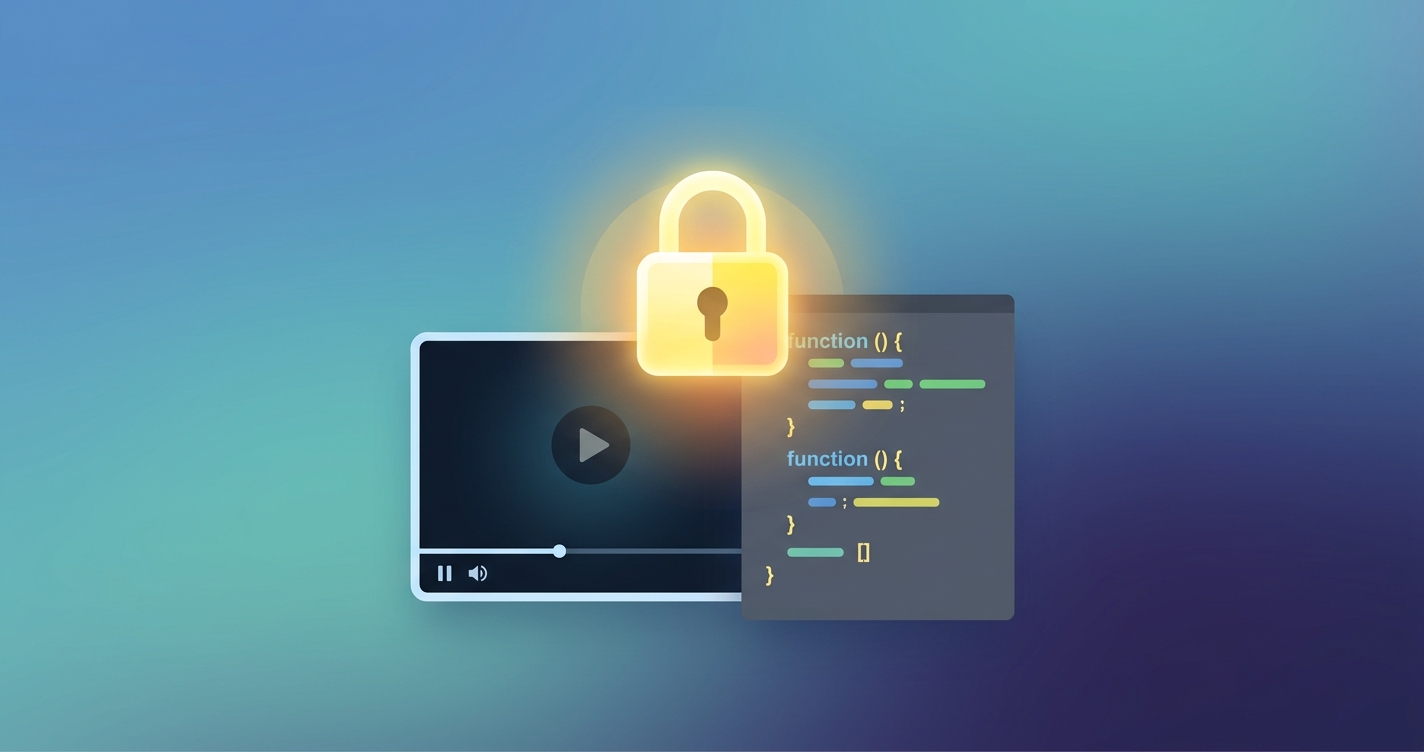
The architecture of modern telehealth platforms has reached an inflection point. Product managers and clinical leaders are pushing for richer remote patient data, driving the integration of contactless physiological monitoring into standard video consultations. A video visit vital signs API offers exactly this capability, extracting heart rate, respiratory rate, and other metrics directly from a standard webcam feed. However, for Chief Technology Officers and compliance teams, routing raw patient video through a third-party dependency immediately raises severe security, privacy, and regulatory concerns. Validating the safety of these tools requires moving past marketing claims to understand the underlying data processing pipelines, encryption standards, and compliance frameworks governing the SDK.
"The average data breach cost for healthcare organizations reached $10.93 million in 2024, remaining the highest across all industries for the fourteenth consecutive year." - IS Partners, LLC (2024)
The architecture of a secure video visit vital signs API
The fundamental security question surrounding any video visit vital signs API is where the processing takes place. Contactless vitals rely on a technology called remote photoplethysmography (rPPG). This technique uses computer vision to detect microscopic variations in facial skin color that correspond with the cardiac cycle and blood volume changes.
In poorly architected systems, the application captures raw video frames and streams them to a cloud server where the rPPG algorithms extract the vital signs. This cloud-based approach is a massive liability. Transmitting high-resolution facial video introduces significant network latency, demands high bandwidth, and creates a massive surface area for data interception. More importantly, it turns the API provider into a handler of Protected Health Information (PHI) and highly sensitive biometric data.
A secure video visit vital signs API utilizes edge computing. In an edge-processed architecture, the rPPG SDK compiles and runs directly on the client device, whether that is a smartphone, tablet, or web browser via WebAssembly. The camera feed never leaves the local environment. The computer vision models analyze the frames in real time, extract the physiological signals, and immediately discard the video data.
The resulting data payload transmitted to the telehealth platform backend is entirely numerical. Instead of megabytes of raw video, the API transmits a few kilobytes of JSON telemetry containing the heart rate, respiration rate, and confidence intervals. By stripping the biometric identifiers (the face) from the clinical data (the vitals) at the point of capture, edge processing neutralizes the primary privacy risks associated with rPPG.
| Architectural Approach | Video Data Transmission | Data Payload Size | HIPAA Privacy Risk Profile | Network Latency | |---|---|---|---|---| | Edge-Processed rPPG | None (Processed locally) | ~2 KB (JSON telemetry) | Low | < 50ms | | Cloud-Processed Video | High (Streaming 1080p) | 5-15 MB/sec | Very High | 200ms+ |
Telehealth API security and compliance frameworks
Securing a telehealth API requires more than just local processing. The transmission of the derived numerical data must still adhere to strict industry standards.
When evaluating a vital signs integration, engineering teams must audit the vendor against the following compliance pillars:
- TLS 1.3 Encryption: All data in transit, even basic numerical telemetry, must be encrypted using current TLS standards to prevent man-in-the-middle attacks.
- Zero Data Retention: The API terms should explicitly state a zero-retention policy for end-user data. The vendor should act solely as a pass-through mechanism, holding no patient records or historical vital signs.
- SOC 2 Type II Validation: A vital signs SDK vendor should possess a SOC 2 Type II report. This third-party audit verifies that the vendor has implemented and consistently followed strict information security policies over a prolonged period, ensuring operational hygiene.
- HIPAA Business Associate Agreements: Even with edge computing, if the API vendor logs IP addresses, session IDs, or any data that could theoretically be tied back to a patient, a Business Associate Agreement (BAA) is legally required under the Health Insurance Portability and Accountability Act.
- Explicit Patient Consent UI: The SDK implementation must allow the telehealth platform to pause the camera feed and capture explicit opt-in consent from the patient before rPPG processing begins, satisfying state-level biometric privacy laws.
Industry applications for secure vitals integration
When the architectural and compliance hurdles are cleared, the deployment of a secure video visit vital signs API opens up new clinical workflows across various sub-sectors of virtual care.
Primary care virtual visits
In standard virtual urgent care, providers often have to rely entirely on subjective patient reporting. Integrating an edge-processed vitals SDK allows the provider to see a real-time dashboard of the patient's heart rate and breathing rate while they converse. Because the processing happens locally, it does not interfere with the video encoding of the primary telehealth stream, ensuring the consultation remains smooth while objective data is layered onto the provider's screen.
Behavioral health and psychiatry
Psychiatric consultations frequently involve prescribing medications that can alter cardiovascular baselines. A secure API allows behavioral health platforms to capture baseline heart rates without forcing the patient to acquire external hardware. Since privacy is critical in behavioral health, the edge-computing model provides reassurance to patients that their facial video is not being stored or analyzed for any purpose other than localized pulse extraction.
Chronic care management
Managing chronic conditions like hypertension or heart failure requires consistent data. Telehealth platforms are using contactless vitals to lower the barrier to data collection. Instead of relying on a patient to properly pair a Bluetooth cuff and navigate a separate application, the platform can capture spot-check vitals during the regular weekly video check-in. The low payload size of the resulting telemetry means this data can be seamlessly routed into the provider's Electronic Health Record (EHR) via standard FHIR resources.
Current research and evidence
The shift toward secure, client-side processing for telemedicine data is heavily supported by recent academic engineering research. Historically, rPPG algorithms were too computationally heavy to run on consumer hardware, necessitating cloud processing.
However, research into lightweight neural networks has fundamentally changed this limitation. A notable study by Zahid Hasan, Emon Dey, and colleagues at the 2022 IEEE International Conference on Smart Computing demonstrated the viability of "RhythmEdge," a real-time edge computing system for contactless heart rate estimation.
The researchers proved that by utilizing multi-task learning frameworks and model quantization, deep feature learning for rPPG could be optimized for resource-constrained devices like standard smartphones. Their work verified that cardiovascular health assessment could be performed accurately without transmitting raw video frames, thereby solving the primary bandwidth and privacy bottlenecks that previously hindered telehealth integrations.
This research confirms that CTOs no longer have to choose between clinical utility and data security. The technology has matured to support highly accurate, entirely local extraction of physiological signals.
The future of contactless vitals data privacy
The regulatory environment surrounding telehealth api security is tightening. The expiration of the COVID-19 Public Health Emergency waivers means that the Office for Civil Rights (OCR) is returning to strict enforcement of the HIPAA Security Rule. Telemedicine platforms that hastily integrated third-party tools during the pandemic are now auditing their software supply chains.
Looking ahead, we can expect the definition of biometric privacy to expand. States are increasingly adopting strict regulations regarding the collection and processing of facial data. Telehealth platforms will need to ensure that their rPPG vendors are not passively using patient video streams to train future machine learning models without explicit consent.
Future iterations of contactless vitals data privacy will likely incorporate federated learning. In a federated model, the rPPG algorithms will improve by learning from local edge processing, updating the global model without ever moving the underlying patient data. Additionally, zero-knowledge proofs could be used to verify that a patient's vitals fall within a certain healthy threshold without the platform needing to store the exact numerical values on the cloud. For now, strict adherence to edge processing and SOC 2 hygiene remains the gold standard.
Frequently asked questions
Does a video visit vital signs API store the camera feed?
A properly architected API using edge processing does not store or transmit the camera feed. The video frames are analyzed locally in the device's volatile memory to extract the pulse signal and are immediately overwritten. Only the numerical vital signs are sent to the server.
Is an rPPG SDK automatically a HIPAA compliant API?
No single software component is automatically HIPAA compliant on its own. Compliance is a shared responsibility based on how the technology is deployed. The SDK vendor must sign a Business Associate Agreement, encrypt all data in transit, and practice zero data retention, while the platform must secure the final storage and access to the derived health data.
Why is SOC 2 Type II important for a telehealth API?
While HIPAA outlines the legal requirements for handling healthcare data, a SOC 2 Type II report provides independent technical validation. It proves to a CTO that the API vendor has the actual operational security controls, access logging, and infrastructure monitoring in place to protect against data breaches over time.
Can edge processing handle older patient devices?
Yes, modern rPPG algorithms are heavily optimized and quantized to run on older consumer smartphones and standard web browsers. If a device has the processing power to handle a two-way WebRTC video call, it generally has the overhead required to process lightweight contactless vitals algorithms locally.
Implementing new clinical tools should not require compromising on infrastructure security. Telehealth engineering teams can now access objective physiological data entirely through local processing, keeping patient video on the device where it belongs. For platforms looking to seamlessly integrate a secure, edge-processed rPPG SDK that is built for strict enterprise compliance, review the platform demo and API documentation at circadify.com/custom-builds.