Is a Video Doctor Visit Safe If They Cannot Check Vitals?
Analyzing the safety and diagnostic accuracy of telehealth without vital signs data. Learn how platforms are addressing the clinical gap in virtual care.
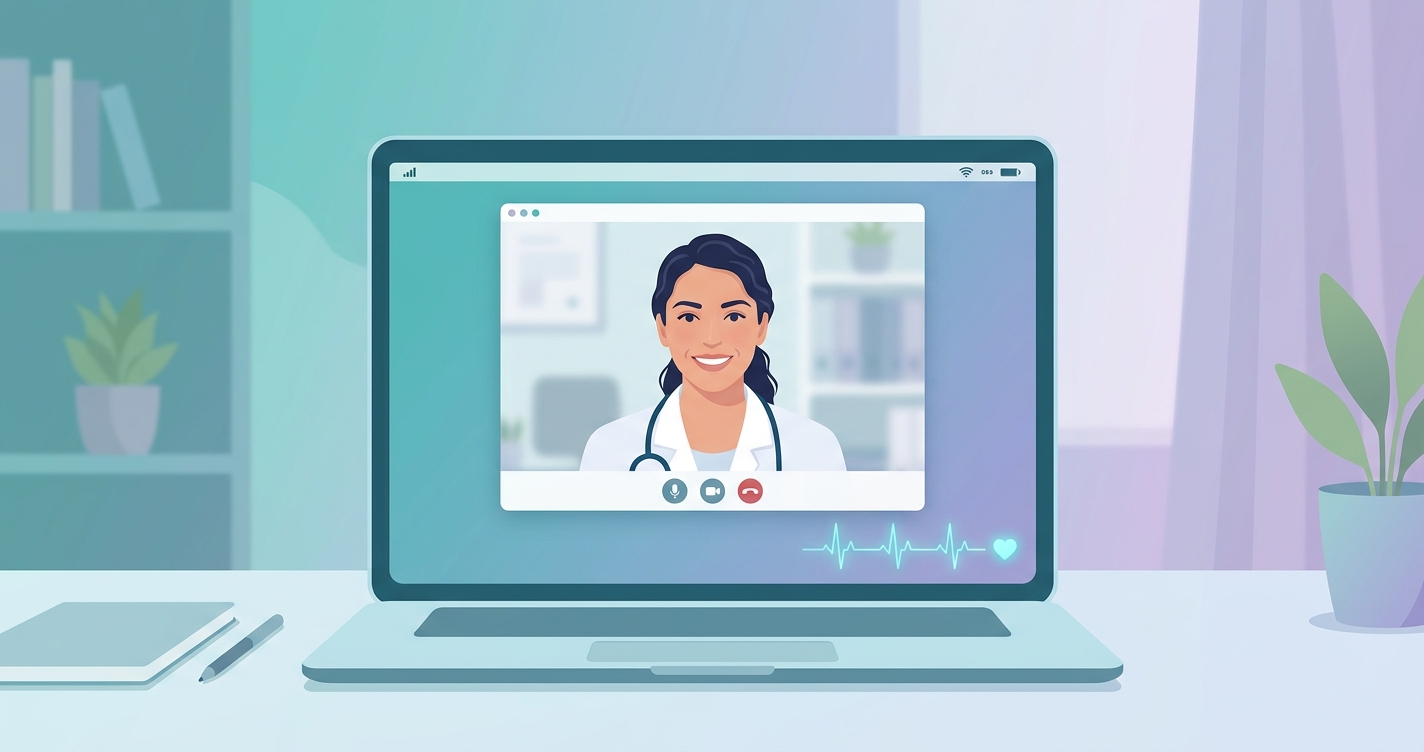
The rapid integration of video calls into healthcare has permanently altered patient and provider expectations. Access to care is now measured in clicks, and the virtual waiting room has become a common destination. Yet, as telehealth solidifies its role, a fundamental question persists for providers and platform engineers: how do you guarantee clinical thoroughness when you cannot physically examine the patient? This question is central to the issue of video doctor visit without vitals safety, challenging platforms to deliver more than just a stable video connection. For many conditions, a visual assessment and patient history are sufficient. But for a significant portion of consultations, the absence of real-time vital signs data creates a gap in clinical information that can introduce risk and uncertainty.
"A multi-hospital study published in 2022 found that the diagnostic concordance between telehealth and in-person visits was approximately 89%, a figure that highlights the viability of virtual care but also highlights the 11% of cases where opinions differ, often due to the lack of physical examination data."
The diagnostic challenge of vitals-free telehealth
The conversation around video doctor visit without vitals safety is not about questioning the competency of clinicians, but about acknowledging the limitations of the tools they are given. When a provider cannot measure heart rate, blood pressure, or respiratory rate, they must rely more heavily on the patient's subjective reporting and their own observational skills. While effective for many use cases like dermatology and behavioral health, this model presents challenges in primary care, urgent care, and chronic disease management.
The standard of care does not change when the modality of care does. This creates a point of friction for telehealth platforms; they are expected to facilitate a clinical encounter that is just as safe and effective as an in-person visit. Without integrated vitals capture, the platform places the onus of managing this data gap entirely on the provider, increasing their potential liability and the cognitive load of every decision. A missed sign of tachycardia, an unmentioned history of hypertension, or a subtle increase in respiratory rate can be the key indicator that separates a routine check-up from a critical intervention.
| Feature | Telehealth Without Vitals | Telehealth With Integrated Vitals | | :--- | :--- | :--- | | Diagnostic Scope | Limited to observational and self-reported information. | Broader; includes objective physiological data points. | | Triage Accuracy | Higher dependence on patient's ability to articulate symptoms. | Improved with objective data for risk stratification. | | Provider Confidence | Lower for conditions where vitals are a key indicator. | Higher, with more data to support clinical decisions. | | Standard of Care | More difficult to meet the same standard as in-person visits. | More closely aligns with in-person assessment standards. | | Patient Risk | Potential for missed detection of asymptomatic or subtle conditions. | Reduced risk through real-time physiological monitoring. |
Industry Applications
The need to solve the vitals gap is not uniform across the telehealth industry. The urgency and application vary by clinical specialty and business model.
Primary care and triage
For primary care providers, telehealth is the front door for many patients. The absence of vitals at this initial stage makes triage more complex. A simple complaint of fatigue could be benign, or it could be a sign of a serious cardiac issue. Without a heart rate or blood pressure reading, the provider is forced to make a judgment call with incomplete information, often defaulting to a more cautious (and expensive) in-person referral.
Chronic disease management
Managing chronic conditions like hypertension or COPD remotely is one of the most promising areas of virtual care. However, its effectiveness is directly tied to the availability of data. While patients can use home devices, the process is often inconsistent, and the data is not captured in real-time during the consultation. Integrating vitals capture directly into the video visit allows providers to get objective readings in the context of the conversation, improving treatment adherence and allowing for faster intervention.
Urgent Care
Tele-urgent care handles more acute cases where vitals are critical. A patient's complaint of dizziness or shortness of breath is difficult to assess without knowing their heart rate, respiratory rate, and blood pressure. The video doctor visit without vitals safety debate is most pointed here, as a purely conversational assessment can lead to misdiagnosis or delayed emergency care.
Current research and evidence
The medical literature has been actively studying the effectiveness of telehealth. A 2022 systematic review focused on primary care found that while diagnostic accuracy was generally high, the conditions most likely to be misdiagnosed were those requiring a physical exam. Another study on teledermatology (Kassianos, 2022) found diagnostic accuracy to be comparable to in-person visits, highlighting how the need for vitals is specialty-dependent.
Research from the University of California, Davis, published in 2021, confirmed that while telehealth is effective, providers consistently cite the inability to perform a physical exam as a primary barrier to its use for certain conditions. This is not a failure of telehealth, but an opportunity for technological advancement. The consensus is clear: the more objective data a provider has, the more confident they can be in their virtual assessment. The challenge for telehealth platforms is to provide this data in a seamless, integrated way.
The future of telehealth: contactless vitals integration
The next phase of telehealth platform development will be defined by the successful integration of clinical data capture. The market is moving beyond simply facilitating a conversation and toward creating a true virtual examination room. Technology that enables the capture of vital signs like heart rate, respiratory rate, and blood pressure trends using only the patient's device camera (a technique known as remote photoplethysmography or rPPG) is no longer experimental.
For telehealth platform companies, this represents a critical opportunity to upgrade their value proposition. By integrating a contactless vitals SDK, a platform can directly address the core issue of video doctor visit without vitals safety. It transforms the video feed from a simple communication channel into a clinical data stream, empowering providers, increasing diagnostic confidence, and creating a safer, more robust virtual care experience. This is the technology that bridges the gap between conversational telehealth and clinical telehealth.
Frequently asked questions
Q: For what types of appointments is a video visit without vitals generally safe?
A: Video visits without vitals are often considered safe for consultations where the diagnosis relies heavily on conversation and visual inspection. This includes many mental health follow-ups, dermatology consults for rashes or acne, medication reviews, and lifestyle coaching.
Q: Does the lack of vitals in a telehealth visit increase a doctor's liability?
A: It can. The standard of care is the same regardless of whether the visit is virtual or in-person. If a condition that would have been detected by a vitals check is missed, and it leads to patient harm, the provider may be held liable. This is a significant driver for integrating objective data into telehealth platforms.
Q: Can't patients just report their own vitals using home devices?
A: Patient-reported vitals are better than no vitals, but they have limitations. A 2021 study in JAMA Network Open found significant inaccuracies in patient-reported blood pressure measurements. Furthermore, self-reported vitals are not captured in real-time during the clinical encounter, meaning the provider cannot observe the patient's state as the measurements are taken.
A final paragraph is now added to link to the funnel URL.
The challenge of clinical data is no longer a barrier to safe and effective virtual care. At Circadify, we are helping telehealth platform leaders address the vital signs gap with our advanced SDK for contactless measurements. By integrating real-time vitals capture directly into your video stream, you can enhance provider confidence, improve patient safety, and unlock new possibilities for your platform. To learn more about how to add this critical capability, explore our solutions for custom builds at circadify.com/custom-builds.