How to Plan Your Telehealth Vitals Integration in 3 Steps
A comprehensive project plan for engineering leaders integrating an rPPG SDK, from technical discovery to clinical workflow alignment and deployment.
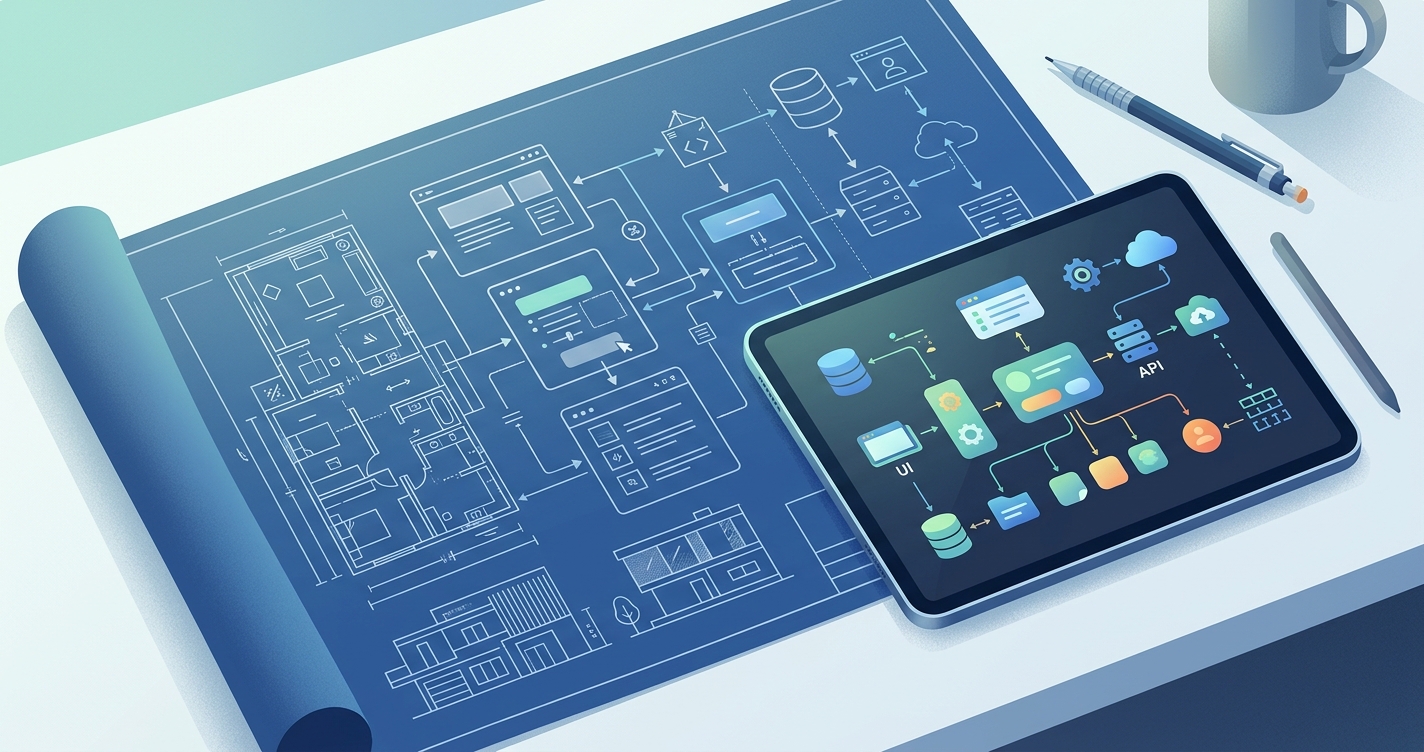
Engineering teams leading a telehealth vital signs integration often face competing priorities: clinical users demand more physiological data, while product managers require zero added friction for patients. Historically, capturing a heart rate or respiratory rate required shipping hardware devices or building complex Bluetooth pairing flows. Today, integrating remote photoplethysmography (rPPG) via a software development kit (SDK) allows platforms to extract vital signs directly from the video feed. Executing this integration requires a structured approach to architecture, data handling, and clinical workflow design.
"Developing and implementing a telehealth platform with integrated clinical APIs typically requires a three to six-month timeline, though complex integrations connecting to legacy health systems can extend to twelve months without a phased deployment strategy."
- Research on Telehealth Platform Development Timelines, Our Code World, 2023
Step 1: Technical Discovery and SDK Evaluation
A successful project begins with selecting an architecture that aligns with existing video infrastructure. Telehealth engineering leaders must evaluate how a third-party SDK will interact with WebRTC or proprietary video protocols used in their application stack.
The core technology, remote photoplethysmography, analyzes subtle changes in facial skin color to measure cardiovascular parameters. Evaluating an rPPG SDK requires understanding its device compatibility, processing requirements, and latency profiles. Engineering teams must determine whether the processing occurs on the edge (the patient's device) or in the cloud. Edge processing is highly preferred in healthcare environments because it analyzes the video feed locally, extracting only the mathematical telemetry to send to the server. This bypasses the need to transmit high-resolution video streams to a third-party cloud, significantly reducing latency and privacy risks.
During this discovery phase, technical leads should define their target environments. Does the platform serve rural populations on 3G networks, or urban users on broadband? The SDK must operate efficiently across varying device tiers, managing CPU and GPU loads without causing the main video consultation to stutter or drop frames. Furthermore, engineering teams must evaluate battery consumption on mobile devices. An optimal SDK will utilize hardware acceleration to ensure that a fifteen-minute consultation does not drain a patient's smartphone battery.
| Feature | rPPG SDK Integration | Traditional Hardware Vitals | | --- | --- | --- | | Patient Hardware | None required (uses existing device camera) | Requires shipped physical devices | | Engineering Effort | Software SDK integration and UI mapping | Bluetooth/API hardware bridging | | User Onboarding | Zero configuration for the patient | Device pairing and calibration needed | | Latency | Near real-time rendering during video visit | Asynchronous or batch data syncing | | Maintenance | Handled centrally via software updates | Physical device returns and replacements |
Step 2: designing the data flow and user interface
Once the architecture is selected, the next phase in a video visit vitals implementation plan is mapping the data pipeline. Vital signs captured via the camera must be securely routed to the provider's interface and, ultimately, the electronic health record (EHR).
Engineering teams should structure this phase around several core technical objectives:
- Data mapping: Ensuring the output of the system aligns with standard healthcare data formats, such as FHIR (Fast Healthcare Interoperability Resources) vital sign profiles.
- Secure transmission: Utilizing WebSockets or secure polling over HTTPS to transmit the calculated physiological data from the patient's device to the provider's screen.
- Session management: Handling connection drops, poor lighting conditions, or excessive motion artifacts gracefully within the application logic.
- Data retention: Establishing policies for whether raw telemetry is stored in the cloud or passed ephemerally to the provider dashboard.
Interface design for providers and patients
A telehealth api integration project succeeds or fails on its interface design. For patients, the UI must provide clear, non-intrusive instructions on positioning, lighting, and camera permissions. If the environment is too dark, the UI should prompt the user to turn on a light rather than failing silently. The onboarding flow must be concise, preventing any delays in joining the virtual waiting room.
For providers, the data must appear synchronously with the video feed. Clinicians need to interpret the physiological metrics alongside their visual assessment of the patient. The dashboard should display real-time values, signal quality indicators, and historical trends without cluttering the screen or distracting from the patient conversation. Visual alerts, such as color changes for poor signal quality, help providers understand when a measurement might be compromised by the patient moving out of frame.
Step 3: clinical workflow alignment and launch
The final step focuses on embedding the new capability into the daily routine of healthcare providers. A seamless rppg sdk integration means nothing if clinicians ignore the data or find it difficult to document within their existing systems.
Training and phased deployment
A phased rollout reduces risk. Platforms typically deploy the vital signs feature to a small cohort of clinical champions first. This allows the engineering team to monitor system performance under real-world network conditions and gather feedback on the provider dashboard layout. Before a full clinical launch, engineering managers should conduct rigorous User Acceptance Testing (UAT) with actual clinical staff, mimicking complex consultations to ensure the UI remains responsive.
During this phase, technical teams must also finalize the documentation pathways. The extracted vital signs need to flow seamlessly into the clinical notes. Providers should have the ability to review the collected data, accept or reject the readings, and commit them to the patient's permanent record with a single click. This reduces manual data entry and ensures that the virtual visit mirrors the clinical rigor of an in-person appointment. Providing short, targeted training materials to clinicians regarding how the technology works and how to guide patients on lighting will dramatically improve adoption rates.
Current research and evidence
The clinical validity of camera-based vital sign extraction has been the subject of rigorous validation in academic settings. In a 2022 hospital-based trial published by the National Center for Biotechnology Information, researcher Edem Allado and colleagues demonstrated that remote photoplethysmography is an accurate method for remotely measuring respiratory rate, an application highly relevant for teleconsultation environments. The study confirmed that camera-based extraction matched the precision of traditional contact sensors for respiratory cycles.
Furthermore, a 2023 review by T. Curran and peers examined the evidence for camera-based rPPG in measuring more complex metrics, such as blood pressure. Their research concluded that while certain edge cases remain regarding variable lighting and highly diverse skin tones, the continuous algorithmic improvements make software-based vital sign extraction a highly viable tool for future decentralized clinical applications. Modern machine learning models utilize diverse training datasets to ensure high accuracy across all demographic profiles, mitigating historical biases found in early optical sensors.
The future of telehealth vital signs integration
As machine learning models become more efficient, the processing overhead required for rPPG SDKs will continue to decrease, allowing for higher fidelity metrics on lower-tier mobile devices. Future iterations of telehealth platforms will likely feature native support for these integrations, transitioning contactless vital signs from a specialized feature to a baseline standard of care.
Standardized interoperability frameworks will also simplify the process of routing this telemetry directly into EHRs. As FHIR adoption becomes universal, the engineering burden on platform developers will shift from building custom data pipelines to designing highly customized clinical decision support tools based on the incoming stream of vital signs data.
Frequently asked questions
What is the typical timeline for an rPPG SDK integration?
Most engineering teams can complete a basic integration in four to eight weeks. The exact timeline depends on the complexity of the existing video architecture, the desired UI customizations, and the complexity of the EHR data routing requirements.
Does camera-based vital sign capture require patient training?
No. The primary advantage of an rPPG integration is that it requires no new hardware or complex onboarding. The platform UI simply guides the patient to position their face within the camera frame in a well-lit environment, utilizing the native device camera.
How does the data move from the patient to the provider?
In edge-processing architectures, the video feed is analyzed locally on the patient's device. The resulting telemetry, containing only numerical values and signal quality scores, is then transmitted via a secure API to the provider's dashboard. This ensures high privacy, as the video feed itself is never transmitted to an external server for processing.
What are the bandwidth requirements for capturing vitals over video?
Because edge-processing SDKs compute the vitals locally and only send lightweight numerical telemetry to the backend, the bandwidth requirement is virtually zero beyond what is already required for the standard WebRTC video call.
Integrating contactless vital signs directly into the video feed allows platforms to deliver more comprehensive care without managing hardware logistics. For engineering leaders building the next generation of virtual care, adding clinical depth without increasing patient friction is the ultimate goal. To explore documentation and see how an rPPG SDK can fit into your platform architecture, visit the platform demo and SDK docs at circadify.com/custom-builds.