How to Capture Blood Pressure Trends During Telehealth Video Visits
An industry analysis of blood pressure capture telehealth video visits workflows, remote monitoring evidence, and data models for virtual care teams.
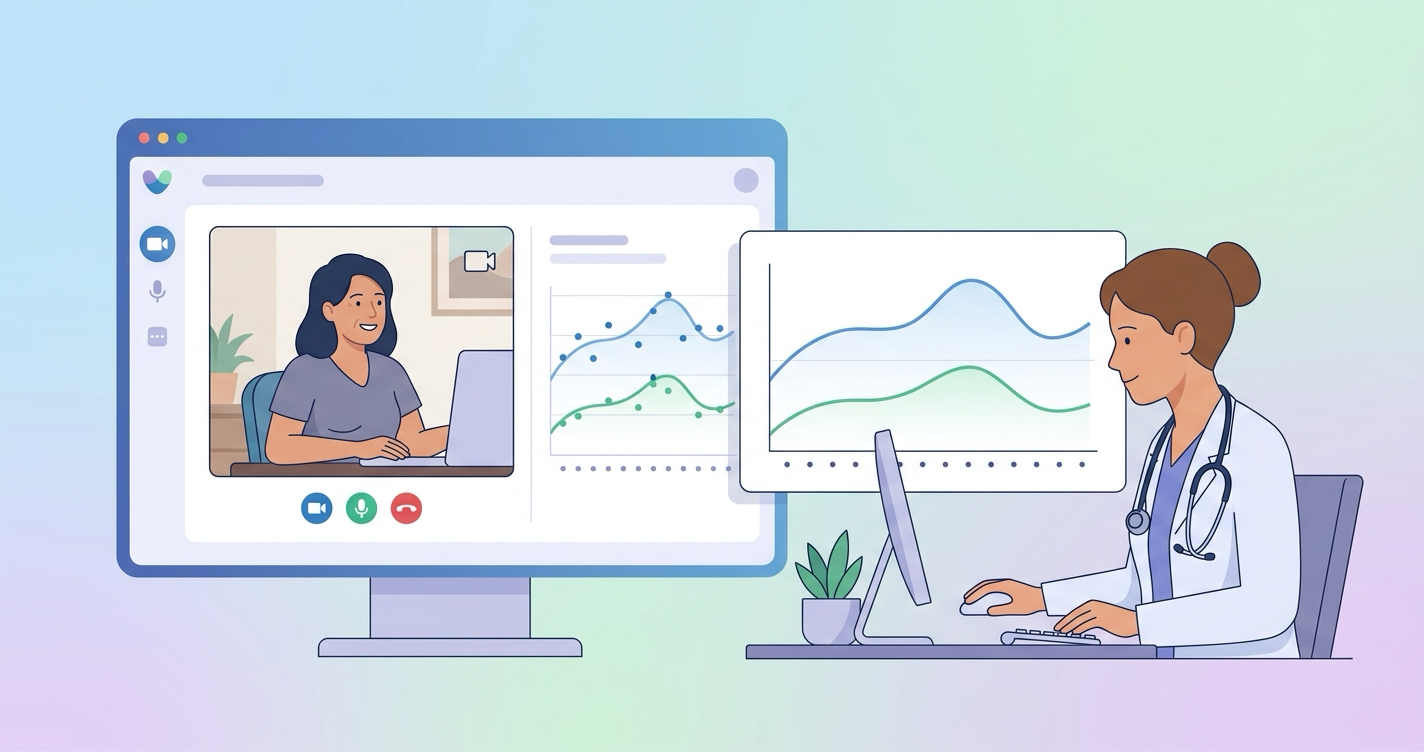
Blood pressure capture telehealth video visits has become less of a device question and more of a workflow question. Most virtual care teams already know patients can measure blood pressure at home. The harder part is getting those readings into the visit at the right moment, with enough context to support decisions, trend review, and follow-up. That is why the strongest telehealth programs increasingly treat blood pressure as a longitudinal signal rather than a one-time number collected for chart hygiene.
"Only about 21% of adults aged 30-79 years with hypertension have their condition controlled." — World Health Organization, Global Report on Hypertension (2023)
Why blood pressure capture telehealth video visits now centers on trends, not one-off readings
A single home reading can be useful, but it rarely tells the whole story. Daichi Shimbo and colleagues wrote in the American Heart Association and American Medical Association's 2020 joint policy statement on self-measured blood pressure monitoring that the evidence is strongest when home monitoring is paired with co-interventions rather than treated as a standalone measurement ritual. In practice, that means telehealth platforms need a repeatable way to gather readings before, during, and between visits.
That framing matters because hypertension is usually managed over time. A clinician on a video call wants to know at least four things:
- Whether the current reading is plausible
- Whether the patient has a recent pattern rather than an isolated spike
- Whether the data came from a validated home workflow
- Whether a follow-up path exists if the trend is worsening
This is where telehealth design starts to separate into tiers.
| Blood pressure capture model | What the clinician sees | Operational upside | Common weakness | |---|---|---|---| | Patient verbally reports a number on the call | One reading, often undocumented context | Fastest to launch | Weak trend visibility and poor auditability | | Patient enters readings manually before the visit | Recent values in a pre-visit form | Better visit preparation | Manual entry errors and inconsistent cadence | | Connected cuff sends readings into the platform | Time-stamped history and averages | Stronger trend review | Hardware logistics and support burden | | Camera-based vitals layer plus RPM workflow | Lightweight capture inside the telehealth experience with longitudinal review | Lower friction and easier engagement design | Requires careful product integration and clinical workflow design |
The point is not that every program needs the same architecture. It is that telehealth blood pressure capture works best when the visit is connected to an ongoing monitoring loop.
What a usable blood pressure capture workflow looks like during virtual visits
The most reliable virtual care workflows usually break the problem into three moments: pre-visit, in-visit, and between-visit monitoring.
Pre-visit data collection
Before the video visit starts, patients can be prompted to complete a recent reading or short capture session. This helps the clinician begin the encounter with fresh data instead of spending the first five minutes troubleshooting whether the cuff is nearby.
Ontario Health's virtual hypertension guidance has emphasized that home blood pressure monitoring is most useful when patients follow a defined measurement protocol. That sounds obvious, but it changes product decisions. A telehealth platform needs reminders, timestamped capture, and enough structure to separate "I checked once last week" from a real pattern.
In-visit confirmation
The live video visit still matters. It gives the clinician a chance to reconcile the home trend with symptoms, medication changes, and adherence. In some programs, the patient repeats a measurement during the visit. In others, the clinician reviews a dashboard of recent values and uses the call to interpret outliers.
Either way, the job of the interface is not just to display a number. It is to make the trend legible.
Between-visit monitoring
This is where reimbursement, care management, and outcomes start to converge. Karen L. Margolis and colleagues at HealthPartners Institute reported in a 2013 cluster randomized trial that home blood pressure telemonitoring combined with pharmacist management improved blood pressure control compared with usual care. The intervention worked because the reading did not disappear after capture. It fed a management loop.
Telehealth teams that want blood pressure trends to matter typically need:
- Timestamped readings tied to the patient record
- Rolling averages over a clinically sensible window
- Threshold rules for follow-up
- Documentation that supports remote review or RPM programs
- A clear distinction between screening data and management data
Industry applications for blood pressure trend capture in telehealth
Primary care follow-up
In virtual primary care, trend capture helps clinicians avoid making medication decisions from a single anxious reading. A short series of home values is usually more informative than a one-off number taken while the patient is rushing to join a call.
Post-stroke and high-risk populations
A 2024 randomized clinical trial involving Black and Hispanic stroke survivors across NYU Langone Health, NYU Grossman School of Medicine, Columbia University, and partner New York institutions found that home blood pressure telemonitoring combined with nurse case management produced larger systolic blood pressure reductions than telemonitoring alone. That result matters for telehealth because high-risk populations often need tighter follow-up than periodic office care can offer.
Employer and payer virtual programs
Payer-backed hypertension programs often care less about the isolated visit and more about whether the platform can surface adherence, escalation, and month-over-month trend stability. Trend capture becomes part of utilization management, not just clinician convenience.
Specialty telemedicine and chronic care pathways
Cardiology, neurology, and chronic care management programs need a data model that can sit across multiple encounters. A value reviewed during one video visit should still be available for later coaching, pharmacist outreach, or escalation review.
Current research and evidence
The evidence base around remote blood pressure monitoring is pretty consistent on one point: home measurement becomes more useful when paired with active care management.
Margolis and colleagues showed this in the HealthPartners telemonitoring trial, where pharmacist-supported monitoring improved control rates and reduced systolic blood pressure over 6, 12, and 18 months. The design is old enough that some product teams dismiss it as dated, but I think that misses the lesson. The core architecture still holds up: repeated home capture, remote review, and treatment adjustment.
More recent work points in the same direction. In 2024, investigators working across New York stroke centers found that adding nurse case management to home blood pressure telemonitoring improved systolic pressure reduction in Black and Hispanic patients after stroke. That trial is especially relevant for telehealth operators because it was built around populations that are often poorly served by fragmented follow-up.
There is also broader support for digital approaches in underserved populations. Yale School of Medicine highlighted a 2024 meta-analysis in JAMA Network Open showing that digital health interventions reduced systolic blood pressure in populations experiencing health disparities. Those interventions were not identical, but the pattern is useful: remote monitoring, messaging, and virtual coaching can move blood pressure in the right direction when the workflow is coherent.
At the population level, the WHO's 2023 hypertension report is the backdrop no telehealth team should ignore. Hypertension affects roughly 1.3 billion people globally, and only about one in five adults with hypertension has the condition under control. That is why trend capture matters. It gives virtual care programs a way to work on control between appointments rather than merely documenting uncontrolled readings on them.
The future of blood pressure trend capture in virtual care
I do not think the market is heading toward more manual workflows. It is heading toward lower-friction capture tied directly to the telehealth interface.
That likely means a few things over the next cycle:
- More pre-visit vitals capture embedded in intake flows
- More hybrid models that combine traditional cuffs with camera-based capture experiences
- More dashboards built around averages, variability, and follow-up status rather than isolated values
- More reimbursement logic tied to transmission cadence and care-management review
The awkward middle phase is happening now. Many platforms already support video visits, messaging, and scheduling, but vitals still sit off to the side in a separate RPM tool or spreadsheet-driven workflow. That split is hard to defend for long.
Telehealthvitals.com has looked at adjacent pieces of this architecture in how video-based vitals improve telehealth clinical outcomes and why telehealth platforms need built-in vitals capture. The next step is tighter operational integration: capture, trend view, review, and follow-up living in one clinical flow.
Frequently Asked Questions
Can telehealth video visits capture blood pressure trends without shipping hardware?
They can capture trends more easily when the platform supports lightweight repeated measurement and structured review, though many programs still use validated home cuffs for the underlying readings. The key issue is less the specific device and more whether the platform can gather consistent, time-stamped data across visits.
Why are blood pressure trends more useful than a single reading during a video visit?
A trend helps clinicians see whether a number is persistent, improving, or an outlier. That makes medication review, follow-up planning, and escalation decisions more grounded than relying on one measurement taken right before the call.
What evidence supports remote blood pressure monitoring in telehealth?
Frequently cited evidence includes Karen L. Margolis and colleagues' 2013 HealthPartners telemonitoring trial, the 2020 AHA/AMA policy statement led by Daichi Shimbo, and a 2024 randomized trial in Black and Hispanic stroke survivors across NYU Langone, Columbia, and partner sites showing benefit from telemonitoring plus nurse case management.
What should telehealth platforms store with each blood pressure reading?
At minimum: timestamp, measurement source, patient identity, recent trend context, and a status showing whether the value has been reviewed or triggered follow-up. Without that context, even accurate readings are hard to operationalize.
Telehealth platforms are steadily moving toward built-in vitals capture because clinicians need more than a floating number on a video screen. Circadify is addressing this space with contactless vitals capabilities that can be integrated into custom telehealth workflows and SDK-driven product builds. Learn more at circadify.com/custom-builds.