How Do I Get My Vitals Checked Without Leaving Home at 2am?
Explore how camera-based vital signs are enabling after-hours telehealth, allowing providers to check vitals from home at night during video visits.
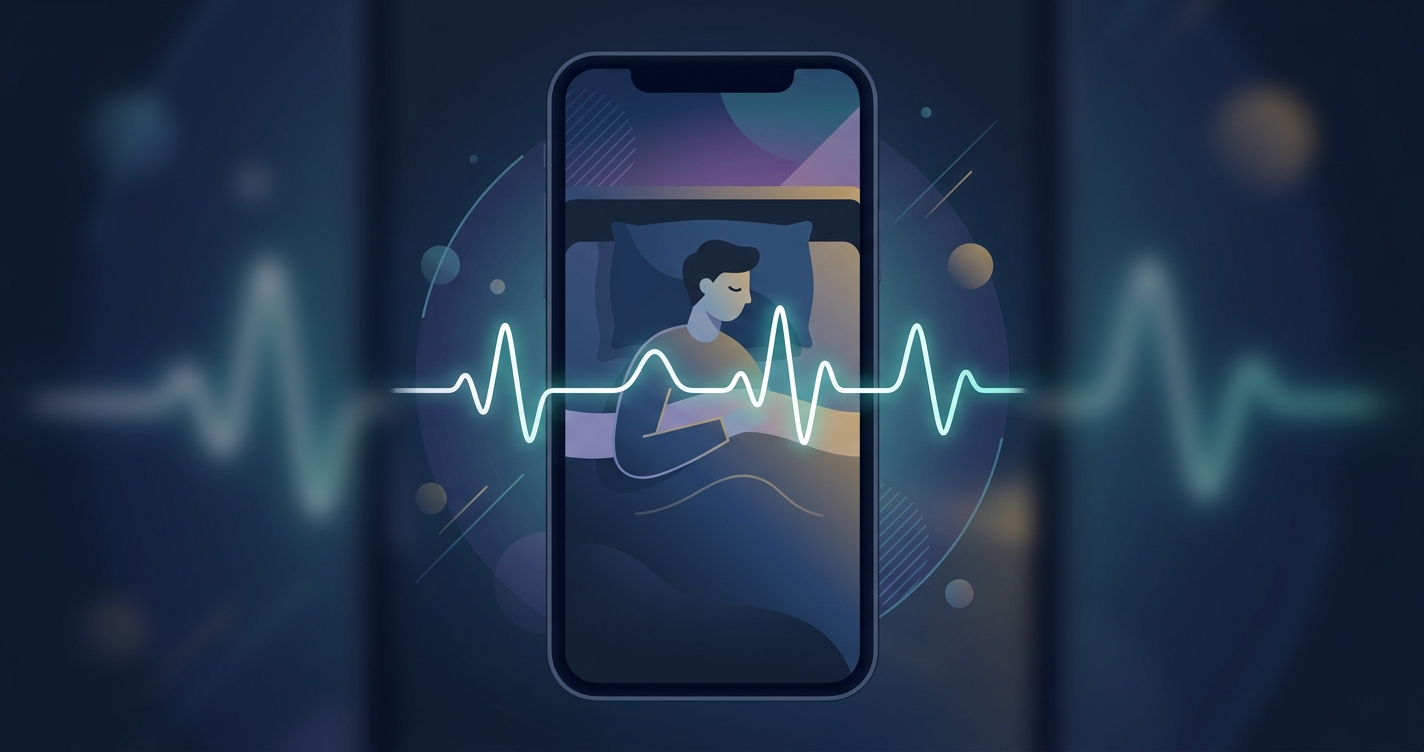
It's a scenario familiar to patients and a logistical challenge for healthcare providers: a health concern arises in the middle of the night. The options have historically been limited and often inefficient, ranging from a disruptive emergency room visit to waiting until morning with mounting anxiety. For telehealth platforms, this after-hours period represents a critical gap in the care continuum. The global telehealth market, valued at over $85 billion in 2023, has solved the problem of access, but the question of clinical capability, especially after dark, remains. Integrating objective physiological data into these late-night encounters is the next frontier, transforming a simple video call into a clinically meaningful assessment.
"Following a peak in Q2 2020, telehealth utilization has stabilized at levels significantly higher than pre-pandemic, with data from Q3 2023 showing sustained adoption across various specialties. This indicates a permanent shift in patient and provider behavior toward virtual care modalities." - Trilliant Health, 2023
The after-hours gap: why it's difficult to check vitals from home at night
The primary challenge in after-hours telehealth has always been the absence of physical data. A provider can listen to a patient's reported symptoms, but they cannot measure a heart rate, observe a breathing pattern, or check for a fever without the right tools. This data gap can lead to defensive medicine, often defaulting to an emergency room referral which is costly and often unnecessary. The patient's home environment at night introduces further complications: low lighting, potential patient fatigue, and the lack of readily available medical devices. To effectively check vitals from home at night, telehealth platforms require a solution that is seamless, requires no special hardware, and functions reliably in non-clinical settings. This is where camera-based remote photoplethysmography (rPPG) technology becomes essential. By analyzing translucent light from a standard video feed, an SDK integrated into a telehealth application can extract physiological signals directly from the patient's face, providing the clinical team with real-time heart rate, respiratory rate, and other key metrics.
| Feature | Traditional After-Hours Options (e.g., ER, Urgent Care) | Telehealth with Integrated rPPG Vitals | | :--- | :--- | :--- | | Accessibility | Requires physical travel, often with significant wait times. | Instant access from anywhere with an internet connection. | | Time to Assessment | Can be hours from symptom onset to seeing a provider. | Minutes; vitals can be captured during the initial intake. | | Clinical Data | Comprehensive, hands-on examination with hospital-grade equipment. | Key vitals (HR, RR, SpO2 trends) captured remotely via video. | | Patient Experience | High-stress, disruptive to sleep, exposure to other illnesses. | Low-stress, comfortable, allows the patient to remain at home. | | Cost | High, especially for emergency room visits. | Significantly lower cost per encounter. | | Provider Workflow | Established but resource-intensive. | Efficient, scalable, allows for rapid triage and decision-making. |
Industry applications for nocturnal vital signs
The ability to check vitals from home at night is not a niche feature; it unlocks significant value for various telehealth and virtual care models. It allows platforms to extend their clinical reach and offer more comprehensive services when patients need them most.
Urgent care platforms
For on-demand urgent care services, the "2 a.m. question" is core to their business model. Integrating camera-based vitals allows providers to make more informed decisions about whether a patient can be treated remotely or needs to be escalated to in-person care. Capturing a patient's heart rate and respiratory rate during a late-night call for shortness of breath, for example, provides objective data that supplements subjective symptom reporting.
Chronic care management (ccm)
Patients with chronic conditions like congestive heart failure (CHF) or chronic obstructive pulmonary disease (COPD) often experience nocturnal symptoms. A sudden spike in heart rate or a change in breathing patterns overnight can be an early indicator of decompensation. Telehealth platforms serving these patients can use scheduled or patient-initiated video check-ins to gather this data, enabling proactive intervention and reducing the risk of rehospitalization.
Hospital-at-Home Programs
As more health systems adopt Hospital-at-Home models, the need for reliable remote monitoring becomes critical. While these programs often use a suite of connected devices, camera-based vitals offer a contactless, low-friction method for frequent spot-checks, especially during overnight hours when a patient may not be connected to other sensors. This can improve patient comfort and compliance while still providing clinicians with the data they need.
Current research and evidence
The feasibility of using camera-based technology to measure vital signs is well-supported by a growing body of scientific literature. Researchers are consistently validating rPPG against clinical-grade medical devices.
- Respiratory Rate: A hospital-based trial published in the Journal of Clinical Monitoring and Computing by Maas, B. et al. (2022) demonstrated excellent agreement between rPPG-derived respiratory rate and measurements from a capnograph, the clinical gold standard. The study found a 96.0% agreement, with a mean difference of just 0.7 breaths per minute.
- Heart Rate: Multiple studies have established the accuracy of rPPG for measuring heart rate. Research presented in 2023 shows a Mean Absolute Error (MAE) typically falling within the range of 2-5 beats per minute (BPM) compared to electrocardiography (ECG) under controlled conditions.
- Limitations and Progress: Researchers are also transparent about the technology's current challenges, including sensitivity to motion, extreme lighting conditions, and performance at very high heart rates. Ongoing research, particularly using advanced machine learning models, is focused on improving the signal processing algorithms to filter out this noise, enhancing the technology's reliability in real-world settings like a poorly lit bedroom.
This research indicates that for many common after-hours scenarios, rPPG can provide a clinically useful and accurate assessment of core physiological parameters.
The future of remote, after-hours vitals
The integration of camera-based vitals into telehealth is just the beginning. The next wave of innovation will focus on using this data to create smarter, more proactive care systems. We can expect to see the development of AI-powered triage bots that use an initial vitals scan to route patients to the appropriate level of care before a human provider is even involved. Combining rPPG data with other inputs, such as audio analysis of a patient's voice or cough, will create a more holistic digital biomarker profile. For telehealth platform developers, the focus will be on building robust, scalable architectures that can handle this influx of real-time data and integrate it seamlessly into existing EHRs and provider workflows.
Frequently asked questions
Q: Is this technology accurate in low light? A: Performance can be affected by very low light, but modern algorithms and the illumination from the device's screen are often sufficient. The technology is designed to work in typical indoor lighting conditions, and ongoing research is continually improving its low-light performance.
Q: Does the patient need any special hardware? A: No. Camera-based vitals technology uses the existing camera on a patient's smartphone, tablet, or laptop. This is a key advantage for on-demand telehealth, as it removes the barrier of shipping or purchasing a separate medical device.
Q: How is patient data and privacy handled? A: Data is typically processed either on the device or via a secure cloud service that is HIPAA-compliant. The video stream is analyzed in real-time, and often only the resulting vital sign data is transmitted and stored, not the video itself, ensuring patient privacy.
The era of purely conversational telehealth is ending. To stay competitive and deliver true clinical value, telehealth platforms must incorporate objective data. By solving the challenge of how to check vitals from home at night, camera-based measurement technology provides a clear path forward. Circadify is at the forefront of this space, offering a robust SDK that allows telehealth and chronic care platforms to integrate contactless vitals into their video visit workflows. To learn more about our technology and explore a custom build for your platform, visit circadify.com/custom-builds.