How Chronic Care Management Platforms Use Contactless Vitals in 2026
By 2026, chronic care management (CCM) platforms will rely on contactless vitals to scale telehealth services. This move is driven by data, not just convenience.
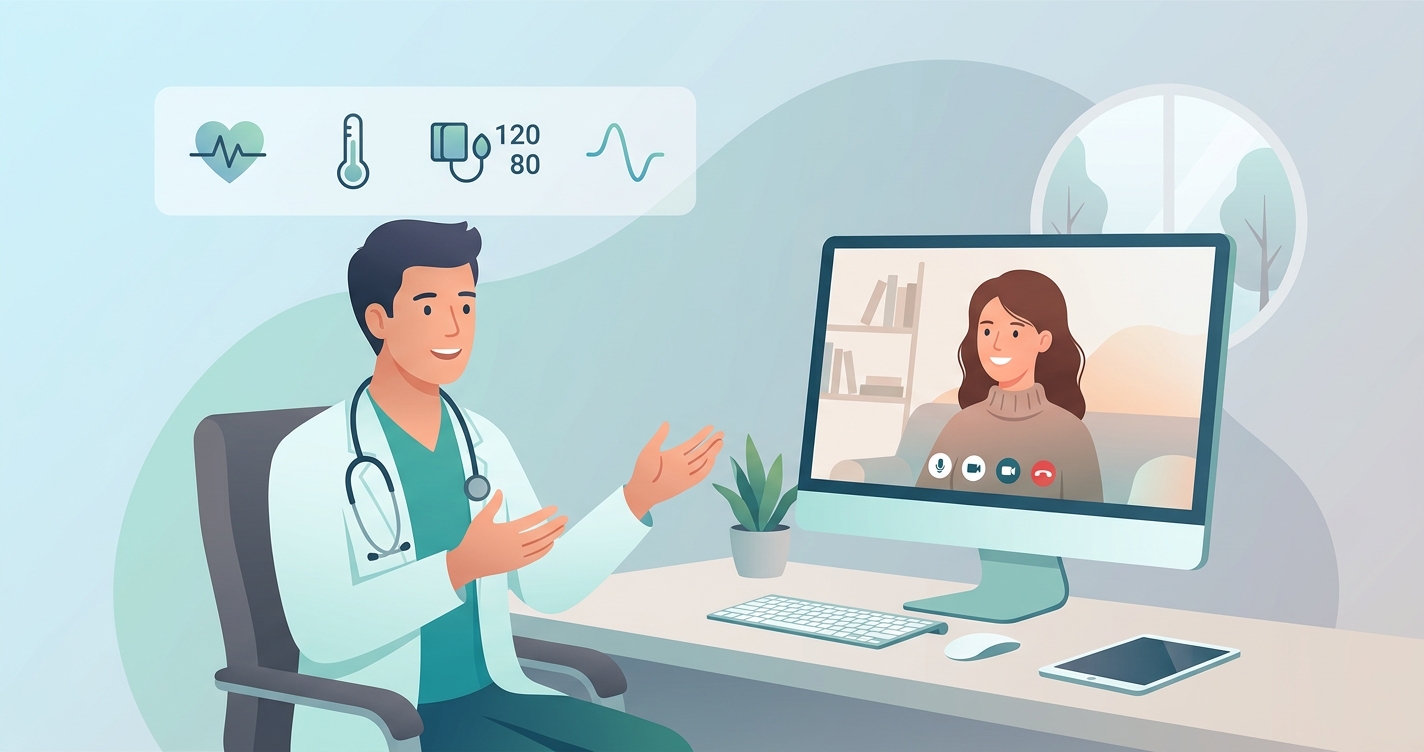
The management of chronic disease is undergoing a fundamental transformation, driven by the integration of telehealth platforms and advanced sensor technology. By 2026, the standard of care for millions of patients will shift from reactive, in-person appointments to proactive, continuous monitoring enabled by contactless vital signs capture. This evolution is not merely a matter of convenience; it is a data-driven imperative, allowing for the scalable and cost-effective management of conditions like hypertension, diabetes, and cardiovascular disease. For telehealth platform companies and their engineering leaders, understanding this shift is critical to designing the next generation of virtual care solutions. The core challenge is no longer just about connecting patients and providers, but about gathering and interpreting the physiological data that enables effective, long-term chronic care management.
"Among patients with chronic illnesses, 75% report using virtual care, with more than half (55%) using telemedicine three or more times in the past year."
- Source: Urban Institute, 2023
The Convergence of CCM and Contactless Vitals
The future of chronic care management contactless vitals telehealth integration hinges on the ability to collect consistent, longitudinal data without imposing a significant burden on patients. Traditional methods, which rely on patients to manually use and report from connected hardware, face persistent challenges with adherence and data consistency. Contactless technologies, particularly remote photoplethysmography (rPPG), are poised to address this gap. rPPG technology uses standard cameras, like those in a patient's smartphone or laptop, to measure subtle changes in light reflection from the skin, which correspond to the pulsatile blood flow. From this, vital signs such as heart rate, respiratory rate, and even blood pressure trends can be derived during a standard video telehealth visit.
This capability transforms the routine virtual check-in into a valuable data collection point. A 2023 study published by the Urban Institute found that patients with chronic conditions are among the most active users of telehealth services. For these patients, the ability to gather objective physiological data during every virtual encounter provides a much richer understanding of their health status than subjective reporting alone. Engineering teams at telehealth software vendors are increasingly tasked with building these capabilities directly into their platforms, ensuring the process is seamless for both patient and provider. The focus is on creating a passive data collection stream that enhances the clinical value of the virtual visit without adding workflow friction.
| Feature | Traditional RPM (Cuffs, etc.) | Contactless Vitals (rPPG) | | :--- | :--- | :--- | | Patient Hardware | Required (e.g., BP cuff, pulse oximeter) | Not required (uses patient's device camera) | | Adherence Barrier | High (requires patient action) | Low (passive capture during video visit) | | Data Frequency | Episodic (when patient takes a reading) | Continuous or frequent (during each call) | | Implementation | Logistics of device shipping & support | SDK integration into telehealth platform | | Patient Experience | Can be cumbersome and intrusive | Seamless, no extra steps for the patient |
Industry Applications
The integration of contactless vitals into chronic care management platforms has significant implications for how telehealth is delivered and monetized.
Proactive triage and intervention
By collecting regular vital signs data, platforms can establish a baseline for each patient. Sophisticated algorithms can then detect deviations from this baseline that may indicate a worsening condition, enabling clinical teams to intervene proactively before a more serious event occurs. A provider-facing dashboard can automatically flag patients whose readings are trending outside of normal parameters, allowing a care manager to follow up with a telehealth visit.
Scalable remote patient monitoring
Contactless vitals dramatically lower the barrier to entry for Remote Patient Monitoring (RPM).
- No need to procure, ship, and manage a fleet of patient devices.
- Onboarding is simplified to a software update.
- Scalability is tied to platform usage, not hardware inventory.
This makes it feasible for health systems to offer RPM services to a much larger population of patients with chronic conditions, not just the highest-risk individuals.
Enhanced clinical workflows
For the provider, having access to real-time vital signs during a telehealth consultation provides a more complete clinical picture. This data can be used to inform treatment decisions, adjust medications, and assess the patient's response to therapy. The key for telehealth platform CTOs is to ensure this data is presented in an intuitive, actionable format within the provider's existing workflow, rather than as a separate, disconnected stream of information.
Current research and evidence
The scientific foundation for contactless vital signs monitoring has been developing for over a decade. A seminal paper by Wim Verkruysse and his colleagues at the Beckman Laser Institute, published in 2008, first demonstrated the feasibility of using a standard camera and ambient light to measure cardiac and respiratory signals. This research laid the groundwork for the development of modern rPPG algorithms.
More recently, research has focused on the clinical validation and refinement of these techniques. A 2021 study published in Frontiers in Cardiovascular Medicine focused on the clinical validation of rPPG for monitoring pulse rate in patients with cardiovascular disease, finding a high degree of accuracy compared to standard ECG measurements. Ongoing research is aimed at improving the robustness of rPPG in real-world conditions, such as low light and patient motion, and expanding the range of measurable parameters to include metrics like blood oxygen saturation (SpO2) and cuffless blood pressure. As these challenges are overcome, the case for chronic care management contactless vitals telehealth integration becomes even stronger.
The future of chronic care management
Looking ahead to 2026, the integration of contactless vitals will be a standard feature of leading chronic care management platforms. The technology will be driven by sophisticated AI that Interprets the raw data. Correlates it with other clinical information from the patient's electronic health record (EHR). This will enable a truly personalized and predictive model of care. The value proposition for telehealth companies will shift from simply providing a communication channel to offering a comprehensive clinical monitoring and management solution. This evolution will be critical for health systems and payers who are increasingly focused on value-based care and improving outcomes for patients with chronic diseases.
Frequently asked questions
Q: Is rPPG as accurate as traditional medical devices? A: rPPG technology has demonstrated high accuracy for measurements like heart rate and respiratory rate when compared to traditional devices in clinical studies. While it is not a replacement for medical-grade devices for all applications, it provides valuable trend data for managing chronic conditions, especially when frequent, low-friction measurements are needed.
Q: How does this technology handle different skin tones and lighting conditions? A: Early rPPG algorithms faced challenges with variations in skin tone and lighting. However, modern approaches use advanced machine learning models trained on diverse datasets to ensure robust performance across a wide range of individuals and environments. This is a key area of ongoing research and development.
Q: What are the primary challenges to implementing contactless vitals in a telehealth platform? A: The main challenges are technical and workflow-related. On the technical side, it involves integrating an rPPG SDK and ensuring reliable performance across different devices and network conditions. From a workflow perspective, the key is to present the captured data to providers in a way that is clinically meaningful and seamlessly integrated into their existing diagnostic and documentation processes.
The ongoing convergence of telehealth and contactless monitoring is set to redefine chronic care. As a leader in this space, Circadify is actively developing the tools and infrastructure to help telehealth platforms seamlessly integrate these capabilities. To learn more about how to add real-time vital signs to your platform, explore our platform demo and SDK documentation at circadify.com/custom-builds.