HIPAA Compliance for Camera-Based Vitals: What Telehealth CTOs Must Know
A guide for telehealth CTOs on the HIPAA compliance requirements for implementing camera-based vital signs (rPPG) in virtual care platforms.
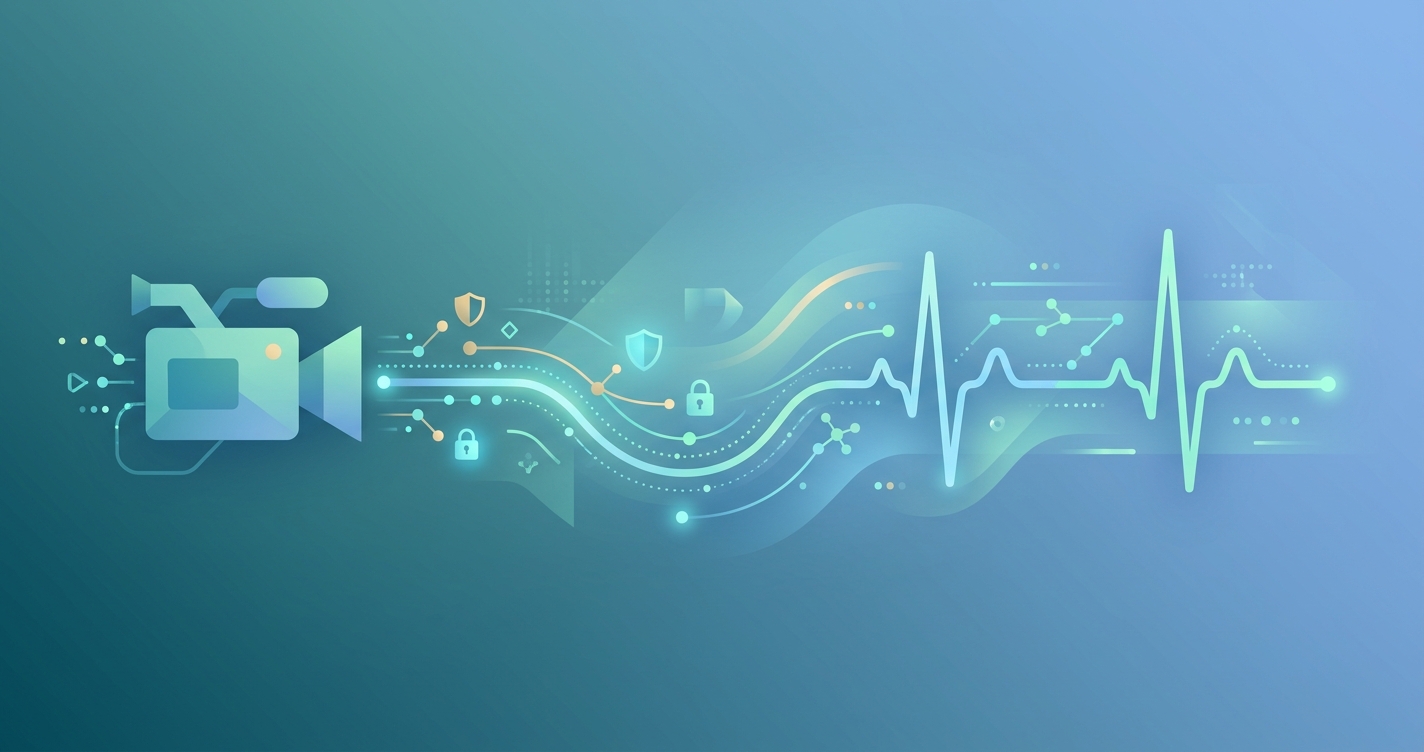
The integration of camera-based vital signs into telehealth platforms represents a significant leap forward in virtual care, but it also introduces new and complex compliance challenges. For Chief Technology Officers and engineering leaders at telehealth companies, understanding the nuances of the Health Insurance Portability and Accountability Act (HIPAA) as it applies to this novel data stream is not just a legal obligation, it is a critical component of platform architecture and risk management. As telehealth platforms evolve from simple video conferencing tools to sophisticated clinical data platforms, the responsibility for safeguarding Protected Health Information (PHI) expands in lockstep. The central question is no longer whether to innovate, but how to do so in a way that is secure, compliant, and builds trust with both providers and patients.
"In 2023, healthcare data breaches reported to the HHS Office for Civil Rights involved the protected health information of over 133 million individuals, a 141% increase from the previous year." - The HIPAA Journal (2024)
Navigating PHI in the Age of Camera-Based Vitals
The core of the issue for HIPAA compliance camera-based vitals telehealth systems is the nature of the data itself. When a patient's vital signs, such as heart rate, respiratory rate, and blood pressure variability, are derived from a video stream using remote photoplethysmography (rPPG), that data becomes PHI the moment it is associated with an individual. This includes the raw video feed, the processed physiological signals, and the resulting vital sign measurements. Under HIPAA, this data is subject to the stringent requirements of the Privacy and Security Rules.
The HIPAA Security Rule is particularly relevant for telehealth platform CTOs. It mandates specific administrative, physical, and technical safeguards for electronic PHI (ePHI). For camera-based vitals, this means that the entire data lifecycle, from capture on the patient's device to processing and storage, must be secured. A common misconception is that if the rPPG processing happens on-device and only the final measurements are transmitted, the compliance burden is reduced. However, if those measurements are identifiable, they are still PHI. Therefore, the transmission, storage, and access controls for this data must be HIPAA-compliant.
A critical step for any telehealth platform integrating third-party rPPG technology is the execution of a Business Associate Agreement (BAA). The BAA is a legally binding contract that requires the vendor to uphold the same HIPAA standards as the covered entity (the telehealth provider). Without a BAA in place, a telehealth platform is in violation of HIPAA if it shares PHI with a vendor, even for the purpose of processing vital signs. This was a key factor in the Federal Trade Commission's (FTC) enforcement actions against telehealth companies in 2023.
| Data State | Key HIPAA Consideration | Recommended Safeguard | | :--- | :--- | :--- | | Data in Transit | The video stream and/or resulting vital signs are being transmitted from the patient's device to the telehealth platform or a third-party processor. | End-to-end encryption (E2EE) for video calls; TLS 1.2+ for all other data transmission. | | Data at Rest | Processed vital signs are stored in a database or other storage system. | AES-256 encryption for all stored PHI. | | Data in Use | Vital signs are being accessed and displayed in a provider-facing dashboard or integrated into an Electronic Health Record (EHR). | Role-based access controls (RBAC), audit logging, and secure authentication (MFA). |
Industry Applications
The application of camera-based vitals is expanding rapidly across the telehealth industry. As platforms move to differentiate themselves and improve clinical outcomes, the integration of contactless vitals is becoming a key feature.
Virtual primary care
In virtual primary care, camera-based vitals can provide a baseline set of measurements that were previously unavailable. This allows providers to make more informed clinical decisions during routine check-ups and follow-up appointments.
- Chronic Disease Management: Regular monitoring of vital signs such as blood pressure trends can help providers manage patients with hypertension or other chronic conditions more effectively between in-person visits.
- Urgent Care Triage: For urgent care consultations, a quick, contactless measurement of heart rate and respiratory rate can help providers assess the severity of a patient's condition and determine the appropriate level of care.
Remote patient monitoring (rpm)
While RPM has traditionally relied on patient-operated devices, camera-based vitals offer a more passive and seamless way to collect data. This can improve patient adherence and provide a more holistic view of a patient's health over time.
- Post-Discharge Monitoring: Patients can be monitored from home after a hospital stay, with camera-based vitals providing an early warning system for potential complications.
- Behavioral Health: In mental health, changes in baseline vital signs can be an indicator of a patient's response to treatment or a sign of escalating anxiety or stress.
Current research and evidence
The science behind rPPG has been developing for over a decade, with a growing body of research validating its accuracy and potential clinical applications. Early research, such as the work by Wim Verkruysse at the University of Rochester in 2008, established the foundational principles of using ambient light and a standard camera to detect blood flow. More recent studies have focused on improving the robustness of the algorithms in real-world conditions, such as low light and patient movement.
A 2021 study published in Nature Digital Medicine by researchers at Google and UC San Francisco found that smartphone camera-based rPPG could accurately measure respiratory rate and heart rate, with results comparable to standard clinical monitors. This and similar studies are providing the evidence base needed to support the adoption of this technology in clinical practice. However, it is crucial for telehealth platforms to critically evaluate the validation data for any rPPG SDK they consider integrating, ensuring it is relevant to their patient population and use cases.
The future of camera-based vitals and compliance
As camera-based vital signs technology matures, so too will the regulatory landscape. We can expect to see more specific guidance from the Department of Health and Human Services (HHS) on the application of HIPAA to this type of data. The trend towards stricter enforcement of data privacy regulations, as seen in the FTC's recent actions, is likely to continue. For telehealth CTOs, this means that building a culture of "privacy by design" is essential.
The evolution of AI in telehealth will also intersect with camera-based vitals, creating new possibilities for predictive analytics and automated triage. This will raise the stakes for HIPAA compliance camera-based vitals telehealth systems, as the algorithms themselves may be subject to regulatory scrutiny. Future compliance efforts will need to address not just the data itself, but also the fairness, accuracy, and transparency of the AI models that use it.
Frequently asked questions
Q: Is the raw video stream considered PHI? A: Yes. If the video stream is being used to derive health information and is linked to an identifiable individual, the video itself is considered PHI and must be protected accordingly. This is why end-to-end encryption for the video call is a critical safeguard.
Q: What if we use a third-party SDK and the data is processed on their cloud? A: In this scenario, the third-party vendor is a Business Associate, and a BAA is required. The telehealth platform is still ultimately responsible for ensuring that the vendor is HIPAA compliant and that all data is handled securely. You must conduct due diligence on the vendor's security practices.
Q: Can we de-identify the vitals data to avoid HIPAA requirements? A: De-identification is a possibility, but it must be done according to the HIPAA Safe Harbor or Expert Determination methods. This is often more complex than it sounds. If the data can be re-identified in any way, it is still considered PHI. For most clinical use cases where vitals are tied to a patient record, de-identification is not a practical solution.
Q: Does the expiration of the COVID-19 Public Health Emergency affect our compliance obligations? A: Yes. During the PHE, the HHS Office for Civil Rights exercised enforcement discretion for some HIPAA provisions related to telehealth. This discretion has now ended. All telehealth providers must be in full compliance with all HIPAA rules.
The journey to integrate camera-based vitals is a strategic one that extends beyond the technical implementation. It requires a deep commitment to data security and privacy that aligns with the core principles of HIPAA. For telehealth platforms aiming to lead the market, demonstrating robust HIPAA compliance camera-based vitals telehealth capabilities is not just a feature, it is a fundamental requirement for building a sustainable and trusted virtual care ecosystem. Circadify is actively working with telehealth leaders to address these challenges, providing a secure and reliable path to integrating next-generation vital signs. To learn more about our rPPG SDK and our commitment to compliance, explore our platform documentation and request a demo at circadify.com/custom-builds.