Can My Dermatologist See My Skin's Health Without Touching It During a Virtual Visit?
How video visit vital signs and rPPG let dermatologists read skin perfusion and physiological signals through a camera, with no patient hardware required.
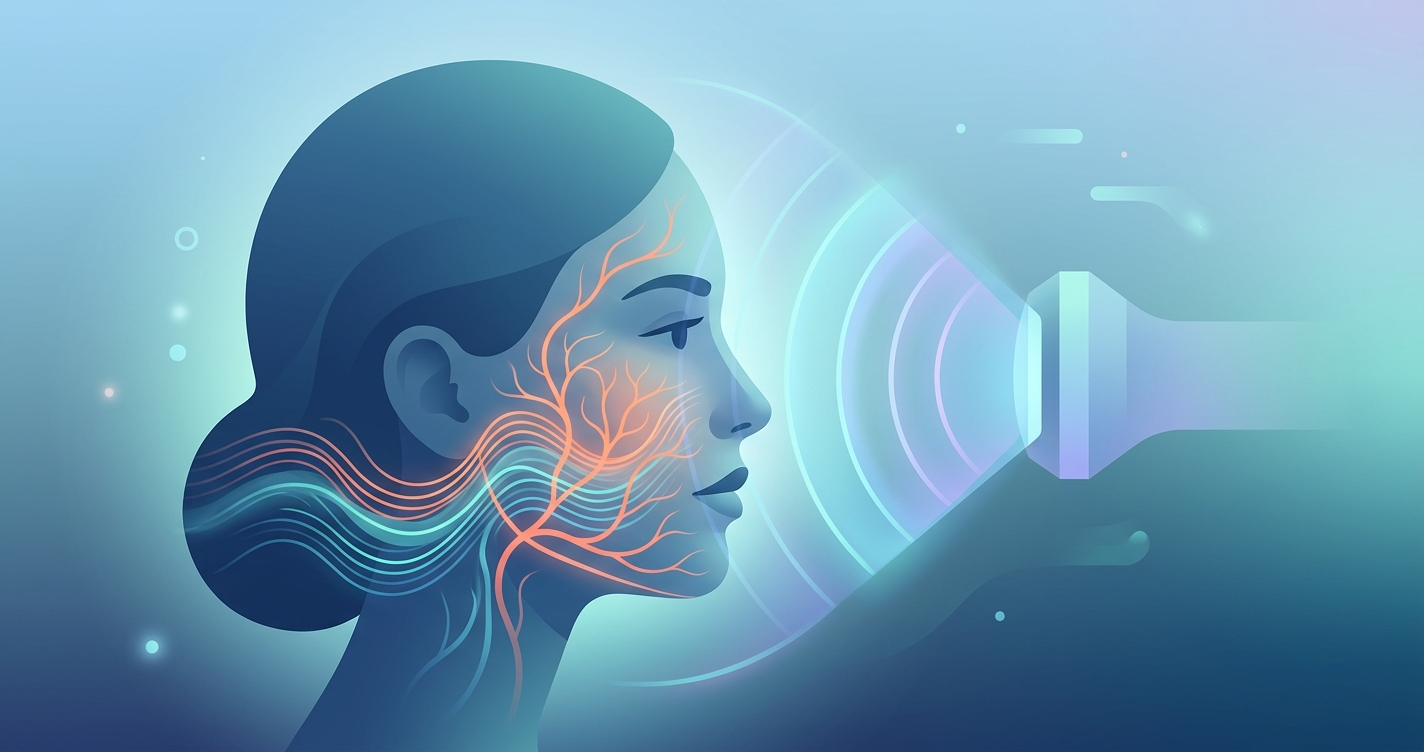
Dermatology has always been the specialty that seems most resistant to going virtual. The discipline is visual and tactile by definition, built around close inspection of color, texture, and the way skin responds to pressure. So when patients ask whether a dermatologist can read their skin's health over a screen, the honest answer used to be a partial yes: the camera could show a lesion, but it could not show what was happening beneath the surface. That gap is now closing. The same camera that streams a teledermatology consult can also extract video visit vital signs, turning the patient's own skin into a measurable signal source rather than just a picture. For telehealth software vendors and CTOs, this reframes dermatology from a niche specialty into one of the more interesting proving grounds for camera-based physiology.
The global teledermatology market was valued at roughly USD 1.1 billion in 2023 and is projected to reach USD 10.3 billion by 2033, a compound annual growth rate near 25 percent, according to Grand View Research (2024).
Why video visit vital signs matter in dermatology
The technology underneath this shift is remote photoplethysmography, or rPPG. It works by detecting tiny color changes in skin as blood pulses through the capillaries just below the surface. A standard RGB camera captures variations in reflected red, green, and blue light with each heartbeat, and signal processing converts those fluctuations into physiological measurements. Healthcare.Digital flagged rPPG as an emerging HealthTech sub-sector to watch across 2024 and 2025, specifically noting its relevance to skin blood flow assessment and teledermatology.
What makes rPPG unusually well suited to dermatology is that the field already cares about skin as a signal. Where a general telehealth visit treats the face as a convenient measurement window, dermatology treats the skin itself as the clinical object. The green-light channel that rPPG relies on is the same channel that reflects changes in cutaneous perfusion, so the camera is reading exactly the tissue a dermatologist wants to understand. That means video visit vital signs in this context are Heart rate and respiration captured incidentally. A potential readout of how well a region of skin is perfused.
This matters for conditions where blood flow and the lesion are linked. Inflammatory dermatoses, wound healing, vascular lesions, and pressure-related skin changes all involve perfusion. A camera that can quantify perfusion trends adds a layer of objective data to what has historically been a subjective visual judgment.
Contact vs contactless skin assessment
The practical question for a platform team is where contactless measurement fits against the established teledermatology workflow. Most virtual dermatology runs on either store-and-forward image transmission or live video, and each has tradeoffs that camera-based vitals can soften.
| Assessment method | What it captures | Patient hardware | Physiological data | Best fit | |---|---|---|---|---| | In-person exam | Visual, tactile, dermoscopy | None (clinic devices) | Direct palpation, blanch test | Complex or suspicious lesions | | Store-and-forward images | Static high-detail photos | Smartphone camera | None | Asynchronous triage | | Standard live video visit | Real-time visual | Webcam | None | Follow-ups, common conditions | | Video visit with rPPG vitals | Real-time visual plus signals | Webcam only | Heart rate, respiration, perfusion trends | Monitoring, inflammation, recovery tracking | | Contact sensor add-on | Targeted readings | Dedicated device | Localized measurements | Specialized research use |
The row that interests most platform buyers is the fourth one. It requires nothing the patient does not already own, which removes the single biggest adoption barrier in remote monitoring: hardware logistics. No shipping, no charging, no pairing, no support tickets for a device that will not connect.
Key advantages that emerge from a contactless approach in this specialty:
- No physical contact needed, which suits patients with painful, contagious, or extensive skin conditions.
- Measurements happen passively during the consult the patient already scheduled.
- Perfusion and vital sign trends can be logged across visits to track response to treatment.
- The same SDK that serves general telehealth extends to dermatology with minimal new integration work.
The honest limitations also belong on the table:
- rPPG reads surface perfusion, not deep tissue or histology, so it complements rather than replaces biopsy or dermoscopy.
- Accuracy is sensitive to lighting, motion, and camera quality.
- Diverse skin tones require careful algorithm design to avoid performance gaps.
Industry applications beyond core diagnostics
The brief here is really about applying vital sign capture to a non-traditional field, and dermatology shows how that generalizes. For vendors, the value is less about a single feature and more about reusing one capture pipeline across many specialties.
Treatment monitoring and recovery
Chronic skin conditions such as eczema, psoriasis, and post-procedure healing are managed over months. A camera that records perfusion trends and basic vitals at each video check-in gives the clinician an objective curve to compare against, instead of relying entirely on the patient's recollection of how the skin looked last week.
Triage and acute concerns
When a patient reports a rapidly changing rash or a wound that feels worse, perfusion data plus heart rate and respiration can help a clinician decide whether the situation needs escalation. These are the same signals that general telehealth platforms already use for safety triage, applied to a new context.
Cosmetic and aesthetic dermatology
The aesthetic side of the field runs almost entirely on subjective outcomes. Objective perfusion data before and after a procedure offers a measurable way to document response, which is attractive to a cash-pay segment that values demonstrable results.
For a CTO evaluating where to invest, the lesson is that one rPPG SDK can serve cardiology-adjacent triage, pediatrics, physical therapy, and dermatology from a single integration. The marginal cost of adding a specialty drops once the capture layer exists.
Current research and evidence
The research base supports both the promise and the caution. A 2024 review published in Frontiers, summarizing deep learning and rPPG advances in contactless physiological measurement, documents steady gains in accuracy as machine learning models replace older signal-processing methods. Work published in MDPI in 2024 on real-time skin segmentation networks shows how isolating skin pixels before analysis improves signal quality, which is directly relevant to dermatology, where the region of interest may be an arm or a back rather than a face.
Skin tone equity is the most scrutinized area. Camera-based physiology research, including multi-site studies measuring physiology across hundreds of subjects spanning a range of skin tones, has made fair performance across pigmentation a primary design goal rather than an afterthought. For a specialty defined by skin, any platform that cannot demonstrate consistent performance across tones will not survive procurement review.
On the diagnostic side, a systematic review and meta-analysis of teledermatology accuracy (NCBI, 2020) found concordance with in-person diagnosis that is high for many common conditions, while varying with image quality and lesion type. That finding sets realistic expectations: contactless signals strengthen the virtual exam, but image fidelity and clinician judgment remain central.
The future of camera-based skin assessment
The trajectory points toward consolidation. Rather than dermatology, cardiology, and primary care each adopting separate measurement tools, the more likely outcome is a shared contactless physiology layer embedded in the video infrastructure, with specialty-specific interpretation on top. For dermatology specifically, the next steps include richer perfusion mapping across larger skin regions, better normalization for ambient lighting in home settings, and tighter coupling between the visual image and the physiological signal so that a clinician sees both in one interface.
The constraint that will shape adoption is trust. Camera-based skin assessment will earn its place as a documented, well-validated complement to the dermatologist's eye, not as a replacement for it. The platforms that frame it that way, and that build the equity and accuracy work in from the start, will be the ones specialty providers actually deploy.
Frequently asked questions
Can a camera really assess skin health without any physical contact? A camera can capture physiological signals such as heart rate, respiration, and skin perfusion trends through rPPG, and it can record high-detail visual images of lesions. It does not replace tactile examination, dermoscopy, or biopsy, but it adds objective data to a virtual visit that previously offered only a picture.
How does rPPG relate to what a dermatologist actually examines? rPPG reads color changes from blood flow in the capillaries just beneath the skin surface, primarily through the green light channel. Because dermatology already focuses on skin and its perfusion, the signal aligns closely with the clinical region of interest, particularly for inflammatory and vascular conditions.
Does camera-based measurement work equally well across skin tones? This is an active research priority. Recent multi-site studies and skin-segmentation methods have improved performance across a range of pigmentation, but consistent accuracy across skin tones depends heavily on algorithm design and validation, which is non-negotiable for a dermatology context.
What does a platform need to add these capabilities? Adding contactless vitals typically requires integrating an rPPG SDK into the existing video pipeline. No patient hardware is needed beyond the device they already use for the call, which is why specialty platforms can extend their existing telehealth stack rather than building new device logistics.
For telehealth platform companies and CTOs exploring camera-based vitals beyond core medical needs, dermatology shows how far one capture layer can stretch. Circadify is building toward exactly this space, with an rPPG SDK that adds real-time vital signs to video visits without patient hardware. Explore the platform demo and SDK documentation at circadify.com/custom-builds to see how contactless physiology fits your specialty roadmap.