Contactless Vitals vs. RPM Devices: A 2026 Telehealth Guide
Explore the pros and cons of contactless vitals telemedicine versus connected hardware for remote patient monitoring. A guide for telehealth platforms.
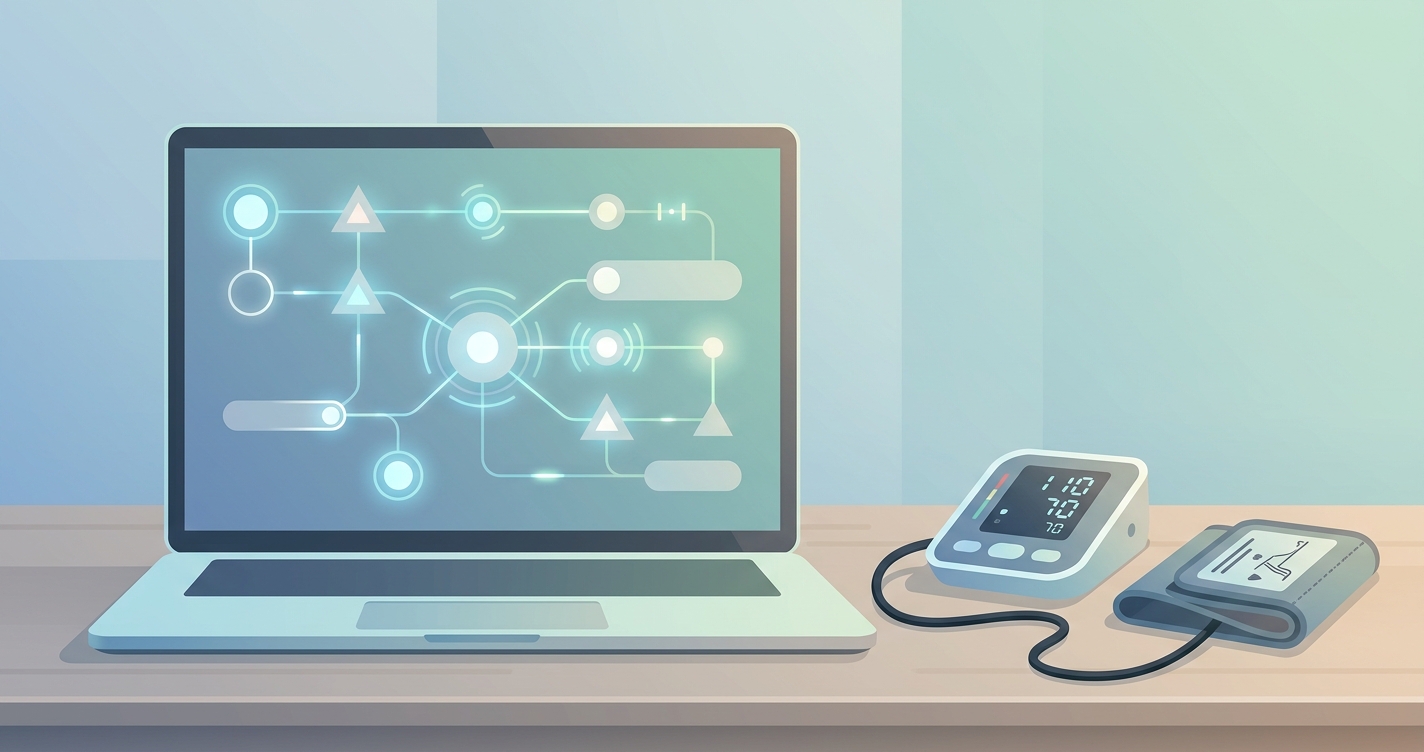
Engineering leadership at telehealth platforms face a fundamental architectural choice when expanding their clinical data capabilities. Virtual care has successfully solved geographic access by routing high-definition video between providers and patients with minimal latency. Yet, the acquisition of objective physiological data during these sessions remains tethered to a physical logistics problem. To solve this, technical teams are exploring contactless vitals telemedicine. Providers traditionally rely on subjective patient self-reporting or manage complex supply chains to distribute connected cuffs and pulse oximeters. As clinical pathways mature and remote care models scale, technology officers and product executives are aggressively evaluating alternative data acquisition architectures.
"Camera-based monitoring solutions evaluated against regulated medical devices demonstrate mean absolute errors within functional clinical ranges, such as plus or minus 3 beats per minute for heart rate, suggesting software-defined alternatives to physical hardware."
Citation: Debjyoti Talukdar, Luis Felipe de Deus, and Nikhil Sehgal, Cureus, 2022
Engineering the shift: contactless vitals telemedicine
The traditional approach to remote patient monitoring vitals relies on distributing connected peripheral devices. Patients receive a blood pressure monitor, a pulse oximeter, or a weight scale in the mail. They must pair the hardware via Bluetooth, keep the batteries charged, and follow specific instructions to take a reading. This operational chain introduces multiple points of failure. Patients frequently abandon the devices, batteries die without warning, and synchronization protocols fail across fragmented mobile operating systems.
To bypass these friction points, software engineering teams are investigating remote photoplethysmography (rPPG). By extracting physiological data directly from the video stream, contactless vitals telemedicine shifts the burden of measurement from physical hardware entirely to cloud or edge computing infrastructure. A standard digital camera captures subtle changes in light absorption on the patient's skin, which correspond to the blood volume pulse beneath the surface. Complex algorithms then process these micro-fluctuations to estimate heart rate, respiratory rate, and other critical metrics without requiring the patient to touch a device or change their behavior.
When evaluating video based vitals vs connected devices, the primary technical trade-off shifts from hardware procurement to algorithmic processing management. Telehealth platforms must optimize CPU utilization, account for variable lighting conditions in the patient's room, and handle varying network latency. However, eliminating the physical hardware supply chain fundamentally alters the unit economics of deploying telehealth vital signs across a broad patient population.
The technical economics of hardware vs. software
When a vice president of engineering or product evaluates the total cost of ownership for a vitals tracking initiative, the financial calculation extends far beyond the unit price of a Bluetooth cuff. Hardware-based remote patient monitoring requires a complex and expensive operational stack. Companies must manage warehouse inventory, handle shipping logistics, process hardware returns, and maintain customer support teams to walk patients through pairing issues. If a firmware update fails or a mobile operating system update breaks the Bluetooth connection, the telehealth platform incurs immediate and recurring support costs.
Deploying an rPPG SDK shifts the financial model from physical logistics to software licensing and compute overhead. The integration occurs once at the application level. When a new version of the extraction algorithm is released, it is deployed via a standard application update or a seamless web deployment. There are no cardboard boxes to ship, no lithium batteries to replace, and no patient onboarding manuals to print. This software-defined approach allows telehealth platforms to offer vital sign tracking to every single user on their network immediately, rather than gating the feature behind a slow hardware procurement process. This operational scalability radically alters how quickly a platform can generate population-level clinical insights and prove return on investment.
Architectural comparison: hardware vs. software data acquisition
| Feature | Connected RPM Hardware | Contactless Vitals (rPPG) | | :--- | :--- | :--- | | Patient Friction | High (requires pairing, charging, and manual placement) | Low (passive capture during the standard video consultation) | | Deployment Cost | High (device procurement, shipping, replacement inventory) | Low (software licensing, API calls, server compute) | | Data Synchronization | Prone to Bluetooth pairing drops and local network failure | Immediate delivery via existing WebRTC or video stream | | Operational Scalability | Linear cost increase required for every new patient | Marginal cost increase to activate the feature per patient | | Environmental Limits | Minimal impact (hardware functions in complete darkness) | Requires adequate ambient room lighting and a stable camera | | Ongoing Maintenance | Physical calibration, battery replacement, hardware decay | Routine software updates, remote algorithm improvements |
Industry applications for software-defined monitoring
Telemedicine software vendors are currently deploying rPPG across various specialized care modalities to streamline data collection and improve provider workflows.
Urgent virtual care
In an acute, ad hoc virtual visit, shipping a physical device is impossible. Patients present with immediate and sometimes alarming symptoms. Physicians need a fast baseline of heart rate and respiratory rate to triage the patient safely and effectively. Contactless extraction allows the telehealth platform to generate these metrics within the very first minute of the consultation. This data feeds directly into the provider dashboard while they are still taking the patient history.
Key integration benefits for urgent care platforms include:
- Zero onboarding delay or hardware prerequisites for the patient.
- Rapid baseline establishment for assessing respiratory distress or unexpected tachycardia.
- Seamless flow of objective data directly into the clinical documentation system.
Chronic care management
Platforms managing chronic conditions typically rely on long-term physical hardware distribution. While a connected cuff remains the standard for diagnostic hypertension management, patient adherence frequently drops after the first three months of an intervention. By supplementing physical devices with passive camera capture during routine check-ins, platforms maintain a consistent and reliable data stream even if the patient stops using their peripheral hardware entirely.
Considerations for chronic care deployment include:
- Reducing the negative impact of device abandonment on care continuity.
- Providing immediate contextual data during the scheduled video touchpoint.
- Lowering the barrier to entry for patients who are resistant to performing daily manual measurements.
Behavioral Health
Psychiatric and therapeutic consultations rely heavily on observing patient affect and physical arousal. Physical hardware is often too intrusive and disrupts the fragile therapeutic alliance between provider and patient. Passive extraction of heart rate and heart rate variability indicators provides the clinician with objective data on physiological stress without interrupting the flow of the session.
Benefits for behavioral health platforms include:
- Completely invisible to the patient during the therapeutic session.
- Allows providers to correlate physiological arousal with specific conversational triggers.
- Requires zero physical interaction, maintaining strict clinical focus on the dialogue.
Post-operative remote monitoring
Surgical recovery requires close observation of vital signs to detect early indicators of complications, such as an elevated resting heart rate signaling infection. Traditionally, patients are sent home with a kit of connected devices and instructed to take their measurements twice a day. Post-operative fatigue and physical discomfort often lead to missed readings. By integrating camera-based extraction into the post-operative video follow-up, care teams can passively verify the patient's physiological status while discussing their pain levels and wound care, ensuring compliance without adding physical burden to the difficult recovery process.
Current research and evidence
The transition from physical sensors to optical extraction is supported by a robust and growing body of peer-reviewed validation. A 2022 study by Debjyoti Talukdar, Luis Felipe de Deus, and Nikhil Sehgal published in Cureus evaluated a camera-based monitoring solution directly against standard regulated medical devices. The research found that remote photoplethysmography technology estimated heart rate, respiratory rate, and oxygen saturation with a mean error of plus or minus 3 units, and blood pressure within plus or minus 10 mmHg. This indicates that optical methods can achieve performance parity with standard consumer-grade hardware under controlled conditions.
Simultaneously, the structural challenges of hardware-based monitoring are exceptionally well documented. A 2024 systematic review by Si Ying Tan in NPJ Digital Medicine examined the impacts of remote patient monitoring interventions across various cohorts. The comprehensive review highlighted that while RPM drives positive outcomes in patient safety and theoretical adherence, the physical logistics and device-related costs present highly heterogeneous results. The operational overhead of distributing, maintaining, and troubleshooting physical hardware severely limits the scalability of traditional RPM programs, thereby driving the technical mandate for frictionless, software-only alternatives.
The future of contactless vitals
As edge computing capabilities exponentially increase on standard consumer devices, the processing of complex rPPG algorithms will migrate from cloud servers directly to the patient's smartphone or laptop browser. This local processing reduces latency, minimizes internet bandwidth dependency, and dramatically enhances patient privacy by keeping raw video data entirely on the local device. Telehealth platform engineering teams will increasingly treat vital signs not as a complex hardware integration challenge, but as a standard software dependency, prioritizing SDKs that offer lightweight WebAssembly or native mobile implementations.
The evolution of these monitoring systems will likely result in a highly optimized hybrid architecture. High-risk patients requiring strict diagnostic-grade continuous monitoring will still receive specialized clinical hardware. However, the vast majority of standard virtual care encounters will rely on ambient, camera-based extraction to provide an immediate clinical baseline. This shift will drastically reduce the cost per patient while permanently standardizing the data acquisition workflow across the entire telehealth industry.
Frequently asked questions
What is remote photoplethysmography (rPPG)? Remote photoplethysmography is a software technology that uses a standard digital camera to measure minute changes in light absorption on the human skin. Every time the heart beats, the blood volume in the microvascular tissue changes, altering exactly how light reflects off the face. Sophisticated algorithms analyze these pixel-level changes to calculate physiological metrics like heart rate and respiratory rate without physical contact.
Do camera-based vitals replace connected blood pressure cuffs? Not entirely. While optical blood pressure estimation is advancing rapidly, connected cuffs remain the absolute standard for diagnostic hypertension management. Camera-based methods are primarily utilized to provide baseline context during a video visit, triage symptomatic patients, and reduce reliance on physical hardware for generalized monitoring, rather than replacing diagnostic hardware in high-risk cardiac cases.
How does room lighting affect contactless vitals telemedicine? Because the technology relies entirely on capturing subtle skin color changes, adequate ambient lighting is strictly required. Very low light, strong backlighting from a window, or heavily tinted artificial lighting can degrade the signal quality. Modern SDKs include intelligent quality indicators that automatically alert the provider and patient if the environmental conditions are insufficient for accurate extraction.
Can rPPG algorithms run on older smartphones or web browsers? Yes, but the overall performance depends heavily on the specific implementation. Cloud-based processing offloads the computational work, allowing older devices to participate as long as they have a stable video connection. Edge-based processing, which runs the algorithms locally, requires more modern hardware but offers significant advantages in strict privacy compliance and reduced latency.
Integrating objective clinical data into a virtual care platform does not have to mean building a massive hardware distribution business. Circadify is developing solutions to help engineering teams embed real-time physiological data extraction directly into their existing architecture. By using a robust rPPG SDK, telehealth platforms can capture vital signs automatically during video visits, operating entirely through software. To explore the documentation and evaluate the technology for your application, visit circadify.com/custom-builds.