What If My Child's Temperature Goes Up When No One Is Looking Tonight?
Why child overnight telehealth temperature monitoring is becoming a patient-safety priority, and how passive contactless vitals fit telehealth platform roadmaps.
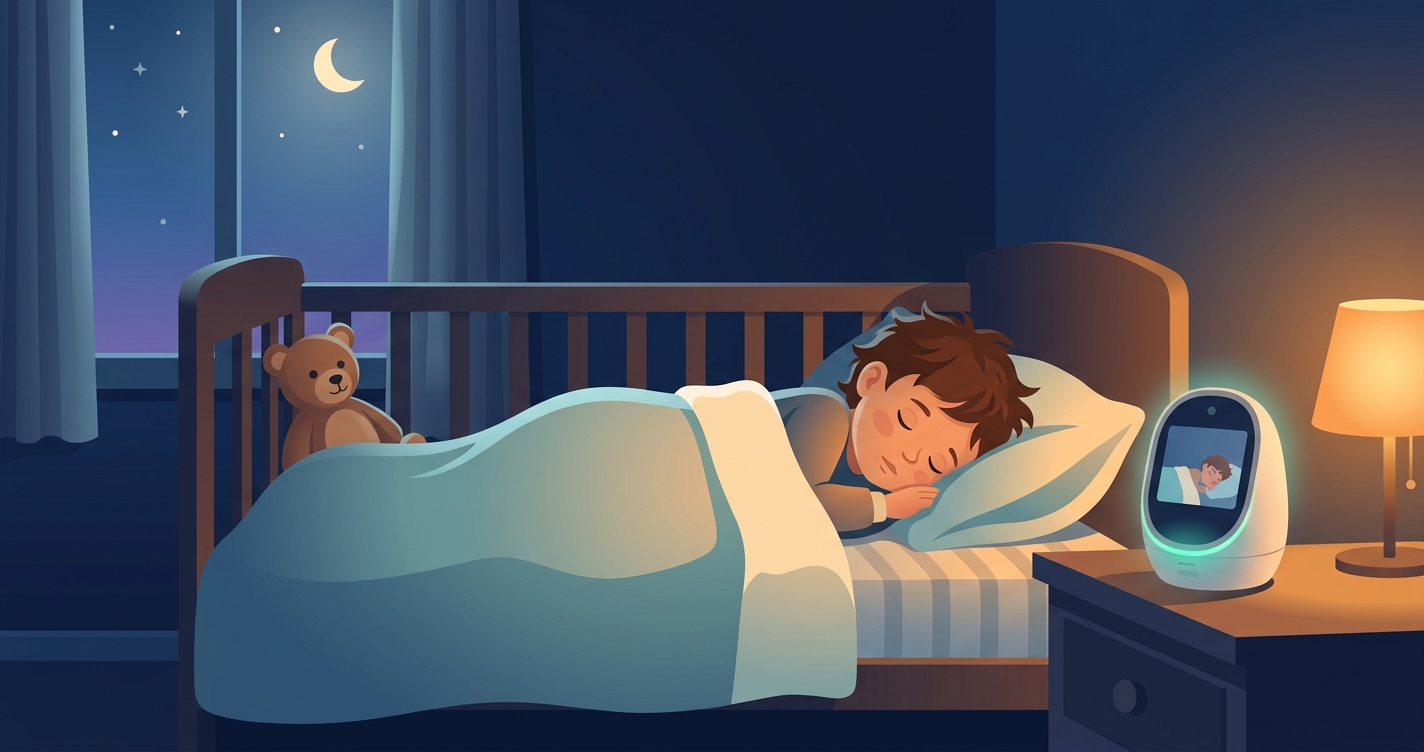
The most anxious hours in pediatric care are the ones with no observer in the room. A parent puts a feverish child to bed, checks once at 11pm, and then sleeps. Between that check and morning, a temperature can climb, plateau, or spike, and no one records it. For telehealth platform companies, this gap is not a minor inconvenience. It is the single most common reason a virtual pediatric encounter ends with the same instruction it started with: keep watching, and call back if things change. The question of child overnight telehealth temperature monitoring sits at the center of whether remote pediatric care can move from reactive triage to genuine patient safety.
Research on continuous fever monitoring in pediatric oncology patients found wearable sensors detected temperature elevations up to 12 hours earlier than scheduled manual checks, a window that often determines whether intervention is timely or late.
The clinical value of that 12-hour window is the reason vendors are revisiting how vitals enter a telehealth record at all. A single forehead reading captured during a 10-minute video visit tells a provider almost nothing about a fever's trajectory. What matters is the curve: when it started, how fast it is rising, and whether antipyretics are bending it back down. That curve is exactly what nighttime erases.
Why child overnight telehealth temperature is a platform problem, not a parenting problem
The instinct is to treat overnight fever as a vigilance issue. Tell parents to check more often, set alarms, write it down. In practice, this fails for predictable reasons. Sleep-deprived caregivers miss intervals. Waking a sick child to take a temperature disrupts the rest the child needs. And manual logs are inconsistent, often reconstructed from memory at the next appointment. The result is that the most clinically important data, the overnight trend, is the least reliable data a pediatric provider ever sees.
For telehealth platforms, this reframes the problem. Child overnight telehealth temperature is not something a parent should solve alone. It is a data-capture capability that the platform either supports or does not. Platforms that support only synchronous video visits inherit the same blind spot as an in-office clinic that closes at 5pm. Platforms that can capture vital signs passively, without requiring a caregiver to act, change what a pediatric service line can promise.
Research from Monash Health on wireless temperature patches for young patients, and the 2024 Swiss comparison study of continuous core temperature recording in children undergoing chemotherapy, both point to the same finding: continuous capture is feasible, well accepted by families, and clinically additive. The technology question has largely been answered. The open question is integration: how does that continuous signal reach the provider's existing workflow without becoming another disconnected app?
Comparing approaches to overnight pediatric temperature capture
Telehealth product teams evaluating this space generally weigh four models. Each carries different implications for hardware logistics, caregiver burden, and how cleanly the data integrates with a video-first platform.
| Approach | Caregiver action required | Overnight coverage | Hardware burden | Telehealth integration fit | |---|---|---|---|---| | Manual thermometer + log | High (wake, measure, record) | Poor, interval-dependent | Low | Weak, data entered manually | | Wearable adhesive patch | Moderate (apply, charge, pair) | Strong, continuous | Per-patient device | Moderate, needs separate data pipeline | | Smart home thermometer | High (active measurement) | Poor | Low to moderate | Weak | | Contactless camera-based capture | Low to none (passive during view) | Periodic, on-camera | None | Strong, native to video stack |
The table makes the tradeoff visible. Wearable patches deliver the best continuous overnight coverage but require shipping, charging, and pairing a device per patient, plus a data pipeline the telehealth platform did not previously own. Contactless camera-based capture using remote photoplethysmography (rPPG) and related optical methods removes the hardware entirely, capturing vitals whenever the child is within view of a device camera. It does not yet match a patch for true continuous coverage, but it integrates natively into the video infrastructure platforms already run.
Key considerations product teams raise when comparing these models:
- Hardware logistics scale poorly. Every per-patient device is a fulfillment, support, and return problem that grows linearly with patient volume.
- Caregiver burden directly predicts adherence. The more a tired parent must do, the less reliable the overnight record becomes.
- Data fragmentation is the hidden cost. A wearable that reports to its own app, separate from the telehealth chart, recreates the silo telehealth was meant to eliminate.
- Passive capture changes the default. When measurement requires no active step, data collection stops depending on whether someone remembered.
Industry Applications
Pediatric urgent care and after-hours triage
After-hours pediatric lines field enormous fever volume, and most calls end in watchful waiting because the provider cannot see a trend. A platform that captures temperature and companion vitals during the video portion of an encounter, and can prompt brief recheck sessions overnight, gives the triage clinician something to act on. Even periodic contactless readings at bedtime and again on a 2am recheck convert a single guess into a short trend line.
Remote patient monitoring for higher-risk children
For children with cancer, congenital conditions, or recent hospital discharge, fever is not a nuisance symptom. It can signal neutropenic emergency. The pediatric oncology literature is explicit that early detection materially changes outcomes. Telehealth platforms serving these populations are the natural home for passive monitoring features, because the clinical stakes justify the engineering investment and families are highly motivated to participate.
School and childcare health programs
Institutional pediatric care increasingly runs through telehealth contracts. Daytime camera-based screening, paired with a parent-facing overnight capability, lets a school health program follow a flagged child across the full day-night cycle rather than losing visibility at dismissal.
Current research and evidence
The evidence base for continuous pediatric temperature monitoring has matured quickly. The 2024 Swiss study comparing two wearable devices in children undergoing chemotherapy found continuous core temperature recording feasible and well accepted, with high guardian satisfaction. Implementation work by the Alex's Lemonade Stand Foundation on wearable fever sensors for children with cancer in Kenya demonstrated that continuous monitoring is deployable even in resource-constrained settings, reinforcing that the limiting factor is integration design rather than raw sensing capability.
On the contactless side, the picture is more nuanced. rPPG methods have a strong and growing literature for heart rate and respiratory rate captured from ordinary cameras, which is why those vitals are appearing first in telehealth integrations. Camera-based temperature estimation is an earlier-stage research area, typically relying on infrared thermography rather than visible-light rPPG, and accuracy in real-world home conditions remains an active research question. Product teams should treat optical temperature as a developing capability and design for transparency about confidence and conditions, while leaning on the more mature contactless heart rate and respiratory rate signals as immediate companions to any temperature workflow.
The honest synthesis: continuous monitoring works and matters clinically. Contactless capture removes the hardware barrier that limits adoption. The two trends are converging, and the platforms positioned to benefit are those whose architecture can ingest passive vitals without a device-management burden.
The future of child overnight telehealth temperature
Three shifts are likely over the next several years. First, passive capture becomes the expectation rather than the premium feature. Once families experience monitoring that requires no waking and no devices, interval-based manual checks will feel as dated as paper symptom diaries. Second, the data model moves from single readings to trends as the unit of clinical value, with platforms competing on how clearly they present a fever curve to both provider and parent. Third, multimodal capture matures, combining camera-derived heart rate and respiratory rate with temperature so that a rising fever is interpreted alongside its physiological companions rather than in isolation.
For telehealth platform companies, the strategic question is ownership of the overnight gap. The vendor that closes it credibly will define the standard for pediatric virtual care safety. That requires an architecture where vitals capture is a native part of the video stack, not a bolted-on hardware program, and where the absence of patient devices is a feature rather than a limitation.
Frequently asked questions
Can a camera realistically capture a child's temperature overnight?
Camera-based capture excels at heart rate and respiratory rate today, with a mature rPPG research base. Optical temperature estimation, typically via infrared thermography, is earlier stage and accuracy depends on conditions. Periodic on-camera rechecks at bedtime and overnight are realistic now; true continuous contactless temperature remains a developing capability that platforms should present with appropriate confidence framing.
Why not just use a wearable patch for continuous monitoring?
Patches deliver excellent continuous coverage but introduce per-patient hardware, charging, pairing, and returns, plus a separate data pipeline. For many telehealth platforms, that operational burden does not scale. Contactless capture trades some continuity for zero hardware and native integration with the existing video infrastructure.
What clinical value does overnight trend data add over a single reading?
A single reading cannot show trajectory. Continuous monitoring studies in pediatric oncology detected fevers up to 12 hours before scheduled checks. A trend line shows whether a fever is rising, plateauing, or responding to treatment, which is what actually drives the decision to intervene.
How does passive monitoring affect caregiver burden?
Passive capture removes the requirement to wake and measure a sick child. Because adherence drops sharply as caregiver effort rises, reducing required action is the most direct way to make the overnight record reliable rather than reconstructed from memory.
Circadify is building toward this exact problem, adding real-time contactless vital signs to telehealth platforms through an rPPG SDK that captures vitals during video encounters with no patient hardware. Telehealth teams evaluating how to close the overnight pediatric gap can review the platform demo and SDK documentation at circadify.com/custom-builds.