Can My Doctor Really Check My Heart Rate Over Video?
Explore the science behind how telehealth platforms can check vitals during a video doctor visit using remote photoplethysmography (rPPG) and camera-based sensors.
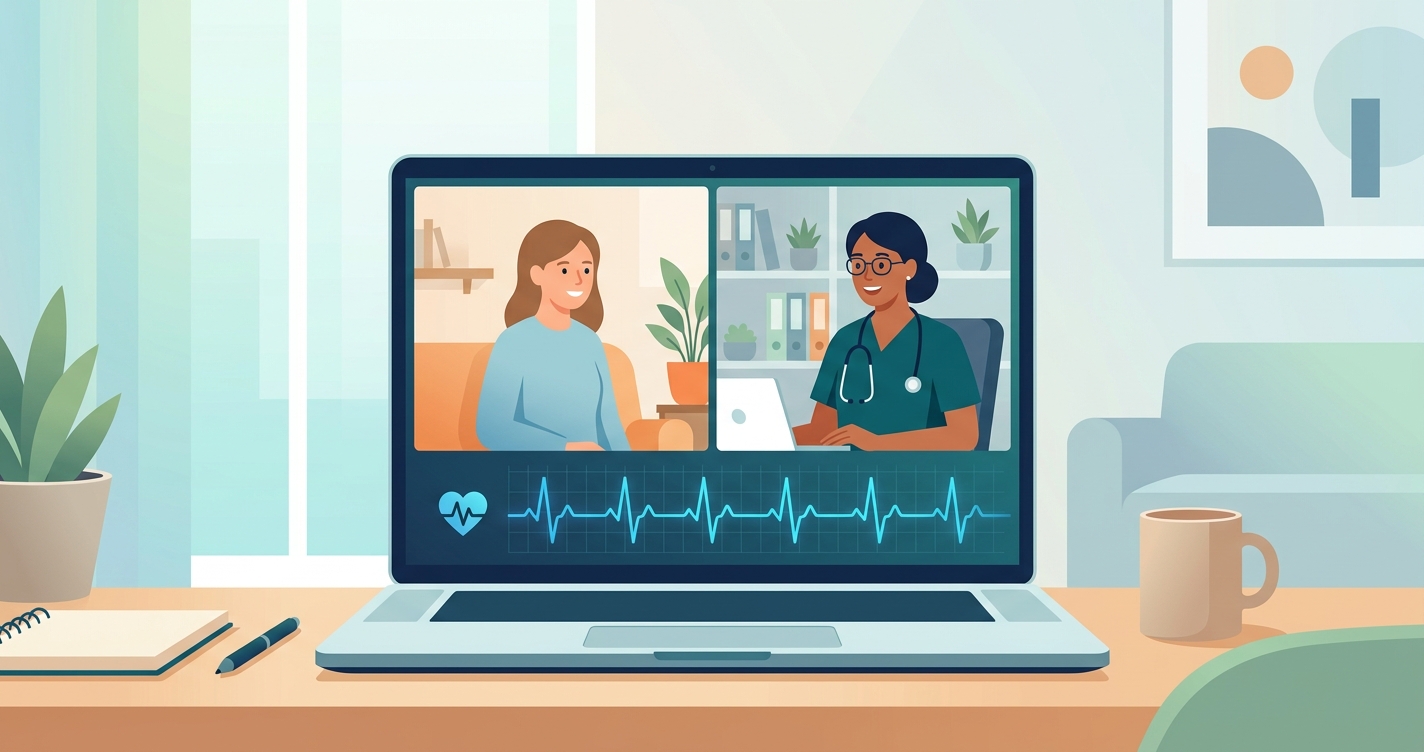
The idea that a simple video call with your doctor could include a check of your vital signs sounds like science fiction to many patients. Yet, the underlying technology, known as remote photoplethysmography (rPPG), is rapidly moving from the research lab to mainstream telehealth platforms. For telemedicine software vendors and platform CTOs, the question is no longer if this technology works, but how to integrate it effectively. The ability to check vitals during a video doctor visit is becoming a key differentiator in a competitive market, transforming the nature of virtual care from a simple conversation to a clinically substantive encounter. This technology uses the patient's own device, a smartphone or laptop camera, to measure heart rate, respiratory rate, and even blood pressure trends, without any specialized hardware.
"In a study involving 1,328 subjects, a video-based contactless technology demonstrated a mean absolute difference of ±2.3 bpm for heart rate and ±2.0 breaths/min for respiratory rate when compared to standard hospital-grade devices." - (Fleming et al., JMIR, 2021)
The science of camera-based vital signs
The core technology that allows a doctor to check vitals during a video doctor visit is remote photoplethysmography (rPPG). At its most basic level, rPPG analyzes imperceptible changes in human skin color to measure physiological data. When your heart beats, it pumps blood through your body. This creates a small, rhythmic change in the volume of blood in the vessels just beneath your skin. Because blood absorbs light, these changes in blood volume cause tiny fluctuations in the amount of light reflected back to a camera.
The process works by using a standard RGB camera to record a short video of a person's face. Sophisticated algorithms then analyze the video feed to:
- Identify the Face: A region of interest (ROI), typically the patient's forehead or cheeks, is automatically detected and tracked.
- Extract the Signal: The algorithm measures the average pixel values within the ROI over time. The green channel of the RGB signal is often used as it contains the strongest plethysmographic signal.
- Filter and Process: The raw signal is filtered to remove noise caused by patient movement, changes in ambient lighting, and other artifacts.
- Calculate Vitals: The processed signal, which represents the patient's pulse, is then used to calculate heart rate and respiratory rate. Advanced models can also derive blood pressure trends and heart rate variability (HRV).
This entire process happens in real-time, providing a continuous stream of data that can be displayed on the clinician's interface during the telehealth session.
| Technology | How it Works | Hardware Required | Key Considerations | | :--- | :--- | :--- | :--- | | rPPG (Video) | Measures color changes in the skin from blood flow using a standard camera. | Smartphone, laptop, or any device with a built-in camera. | Dependent on lighting conditions and patient stillness. Algorithms must be robust to motion and different skin tones. | | Contact PPG | Uses an optical sensor (e.g., in a pulse oximeter) to transmit light into the skin and measure changes in absorption. | Wearable device, fingertip pulse oximeter. | Requires patient to own and correctly use a separate piece of hardware. | | ECG/EKG | Measures the electrical activity of the heart through electrodes placed on the skin. | Specialized medical device (e.g., Holter monitor, ECG patch). | Gold standard for cardiac monitoring but requires in-person application or complex patient setup. | | Manual Pulse | Clinician or patient physically counts the number of heartbeats over a set time. | A watch or timer. | Prone to human error, provides only a single point-in-time measurement. |
Industry applications for telehealth platforms
The integration of rPPG technology is not just a feature enhancement; it's a strategic move that unlocks new clinical workflows and revenue models for telehealth software companies.
Urgent care and triage
For on-demand virtual urgent care, the ability to check vitals during a video doctor visit provides immediate, objective data for triage. A patient presenting with symptoms like dizziness or shortness of breath can have their heart and respiratory rate assessed instantly, helping the provider determine if the situation requires emergency care or can be managed remotely. This objective data point is a significant improvement over relying solely on patient-reported symptoms.
Chronic care management
In chronic care, particularly for conditions like hypertension or heart failure, continuous or regular monitoring is key. While remote patient monitoring (RPM) with connected devices is common, it suffers from patient adherence issues, forgotten measurements, uncharged devices, and data syncing problems. An rPPG-based system allows for effortless "spot-check" measurements during routine video check-ins, lowering the barrier to data collection and providing a more consistent view of the patient's status.
Routine follow-ups and medication management
Providers conducting routine follow-up visits, such as for medication adjustments, can gather baseline vitals at the start of each call. This allows them to assess a patient's response to treatment over time in a more data-driven way. For example, a psychiatrist adjusting an ADHD medication can monitor for changes in heart rate, a known side effect, during a standard telepsychiatry session.
Current research and evidence
The scientific community has been actively validating rPPG technology for over a decade. Early research focused on controlled lab environments. For instance, researchers Wim Verkruysse and colleagues from the University of Amsterdam demonstrated the basic principles as early as 2008. More recently, the focus has shifted to real-world clinical settings and the use of deep learning to improve accuracy.
A 2023 study published in Scientific Reports by researchers from the University of South Australia confirmed that consumer-grade cameras could achieve a high level of accuracy for heart rate and respiratory rate. Their work highlighted the importance of advanced signal processing to handle variations in lighting and skin tone, challenges that are critical in a telehealth context. Further research from institutions like University College London has focused on developing robust algorithms that can maintain accuracy even with head motion and in poor lighting, making the technology more reliable for at-home use. The consensus is that while rPPG is not yet a replacement for hospital-grade ECGs for diagnostic purposes, it is a reliable tool for estimating resting heart rate and respiratory rate in a general population, with accuracy often within 3-5 beats per minute of the gold standard.
The future of contactless vitals
The trajectory for this technology is pointed towards greater accuracy and an expanded range of measurements. Researchers are making progress on reliable, camera-based blood pressure estimation, which has long been considered the "holy grail" of contactless monitoring. While current systems can track blood pressure trends after an initial cuff-based calibration, the goal is to develop a completely calibration-free model. Other vitals like oxygen saturation (SpO2) are also in the advanced stages of research and development for camera-based measurement. As machine learning models become more sophisticated and are trained on more diverse datasets, the accuracy and reliability of the technology will continue to improve, making the ability to check vitals during a video doctor visit a standard, expected part of any virtual care platform.
Frequently asked questions
Q: Is it really as accurate as the devices in a doctor's office? A: For measuring resting heart rate and respiratory rate, research shows that rPPG technology can be very accurate, often within a few beats per minute of the measurements from standard clinical devices. However, it is not yet considered a diagnostic replacement for medical-grade equipment like an ECG, especially in cases of arrhythmia or other complex cardiac conditions.
Q: How does it work with different skin tones? A: This was a significant challenge in early research. Modern algorithms, however, use advanced techniques and are trained on diverse datasets to ensure they work accurately across the full range of human skin tones. The technology typically analyzes the green light channel, which is less affected by melanin levels than other light spectra.
Q: What about patient privacy and data security? A: This is a critical consideration for telehealth platform developers. The video stream is analyzed on-device or on a secure server, and only the resulting numerical data (e.g., "80 bpm") is transmitted and stored in the patient's record. The video itself is not typically stored. Platforms must ensure their integration architecture is fully HIPAA compliant.
As telehealth evolves, the line between a simple video call and a comprehensive clinical assessment will continue to blur. Camera-based sensing is a key part of that evolution. For telehealth platform vendors looking to stay ahead of the curve and add clinically meaningful features, integrating this technology is no longer a question of if, but when. Circadify is at the forefront of this space, providing a robust SDK that enables you to add vital signs capture to any video telehealth platform. To learn more about our custom builds and access the SDK documentation, visit circadify.com/custom-builds.